

A work retreat package is a curated set of services bundled together to support team building, strategic alignment, and employee wellbeing through an organized offsite event. It typically combines lodging, meals, meeting spaces, facilitation, and group activities into a single offering that a venue or operator manages on your behalf. Providers like Firefly Venues near Nashville and The Range Texas have built their entire business model around this format. The goal is simple: remove the logistical burden from your team so everyone can focus on the work that actually matters. Whether you are planning a leadership offsite or a full company gathering, understanding what these packages include is the first step to choosing the right one.
What is a work retreat package and what does it include?
A work retreat package is a pre-structured program that combines the core elements of an offsite event into one coordinated offering. The most complete versions cover lodging, all meals, meeting infrastructure, onsite facilitation support, and group activities. Firefly Venues offers fully integrated packages where lodging, meals, snacks, beverage service, AV equipment, daily staff support, and activities are all included in a single rate. That approach eliminates the need to negotiate with multiple vendors separately.
The standard components you should expect in any solid package are:
- Lodging: Private rooms or shared accommodations on or near the venue property
- Meals: Breakfast, lunch, and dinner prepared and served on site
- Meeting spaces: Dedicated rooms with tables, chairs, whiteboards, and projection equipment
- AV and tech support: Screens, microphones, video conferencing tools, and a technician
- Facilitation support: Onsite staff who manage room setup, scheduling, and logistics
- Group activities: Team challenges, outdoor experiences, or wellness sessions
Optional add-ons expand the base package significantly. Firefly's component pricing starts at $90 per person for culinary upgrades, $600 per day for snacks and beverages, $800 per day for AV support, and $900 per day for dedicated onsite assistance. These numbers show that a fully loaded package can cost considerably more than the base rate, so reviewing the add-on menu before signing is critical.
Pro Tip: Match each package component to a specific retreat goal. If your team needs deep focus work, prioritize AV quality and quiet meeting rooms. If connection is the priority, invest in shared meals and evening activities instead.
The benefits of offsite team retreats are well documented, but they only materialize when the package components align with what your team actually needs.
How do retreat packages support different team goals?
Retreat packages are not one-size-fits-all. The best ones are designed to support multiple work modes simultaneously, which is what separates a good venue from a great one. Rock Springs, a 200-acre estate near Nashville, accommodates 20–35 executives with dedicated spaces for plenary sessions, breakout discussions, and private quiet work. That spatial variety is what allows a multi-day leadership retreat to sustain momentum without burning people out.
Your team's goals should drive every package decision you make. Common retreat objectives fall into four categories:
- Strategic alignment: Leadership teams working through annual planning, OKRs, or company direction
- Team cohesion: New teams or recently merged groups building trust and shared culture
- Skill development: Workshops, training sessions, or group learning facilitated by an expert
- Recovery and wellbeing: Rest, reflection, and recharging after a demanding quarter
Each objective calls for a different package configuration. A strategic alignment retreat needs strong AV infrastructure, private breakout rooms, and a tight agenda. A wellbeing-focused retreat benefits more from wellness elements like yoga sessions, nature walks, and unstructured downtime. Mixing these without a clear priority creates a retreat that serves no goal well.
Venues that support simultaneous work modes, such as quiet individual work alongside group plenaries, are particularly valuable for multi-day programs. That design prevents the energy crashes that happen when every session is high-intensity and back-to-back.

Pro Tip: Write your retreat's top three goals on a single page before you contact any venue. Share that document with the venue coordinator on your first call. Venues that ask clarifying questions about your goals are the ones worth trusting.
Retreat package structures and pricing: what to expect
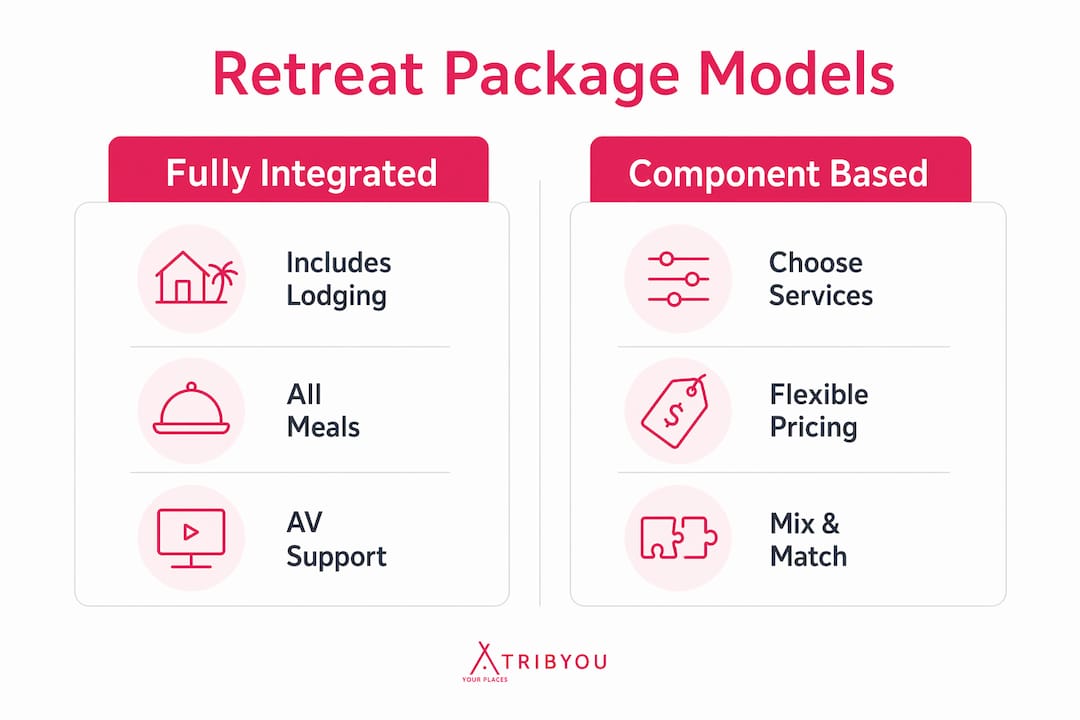
Retreat packages follow two broad pricing models, and knowing the difference saves you from budget surprises. The first is the fully integrated package, where one rate covers everything. The second is the component-based model, where you build your package from individual line items.
| Package model | What's included | Pricing approach | Best for |
|---|---|---|---|
| Fully integrated | Lodging, all meals, AV, facilitation, activities | Flat rate per night or per group | Teams wanting simplicity and predictability |
| Component-based | Base venue fee plus add-ons | Per person or per day per item | Teams with specific needs and tighter budgets |
| Per-person scaled | Core services with group discounts | Lower rate as confirmed group size grows | Larger teams of 30 or more |
Firefly's Paradise property starts at $7,000 per weekday for the full package, while Rock Springs starts at $15,000 per weekday. The Range Texas offers a different structure, with packages starting at $1,500 and food and lodging priced separately. These examples show the wide range of investment levels available depending on the venue and model you choose.
Larger groups benefit from economies of scale. Avalon Castle, for example, reduces per-person costs as confirmed group size increases. That dynamic rewards teams that commit early and communicate headcount accurately. A group of 40 people will almost always pay less per person than a group of 15 at the same venue.
Flexibility in a package is valuable, but it also adds complexity. Every optional add-on requires a decision, a budget line, and a coordination point. Managers who prefer predictability should lean toward fully integrated packages. Managers who want control over specific elements should choose component-based structures and build carefully.
Practical tips for selecting and planning your retreat package
Effective retreat planning starts with decisions made before you contact a single venue. Buffer's Retreat Planning Playbook, developed after hosting 14 retreats over 12 years, emphasizes goal-driven agendas and logistics aligned to team objectives. That principle applies directly to package selection.
Follow these steps to avoid the most common planning mistakes:
- Define your goals first. Write down what success looks like at the end of the retreat. Vague goals produce vague agendas and wasted budget.
- Set a total budget, not just a venue budget. Factor in travel, pre-retreat materials, and any post-retreat follow-up costs.
- List your non-negotiables. Reliable Wi-Fi, private rooms, dietary accommodations, and accessibility needs should be confirmed before you shortlist venues.
- Request itemized quotes. Ask every venue to break down what is included and what costs extra. Compare line items, not just totals.
- Build a centralized resource hub. Buffer uses shared Notion pages to provide travel info, agendas, and FAQs, which reduces attendee confusion and cuts repetitive questions during retreat week.
- Communicate the agenda early. Share a draft schedule at least two weeks before the retreat so team members can prepare and manage expectations.
Mixed preferences within a team are one of the hardest things to manage. Some people want structured workshops all day. Others need quiet time to process and recharge. The best packages accommodate both by building in optional sessions and protected free time. Forcing everyone into the same schedule for three days straight is the fastest way to generate negative feedback.
Pro Tip: Ask your venue coordinator for a sample agenda from a previous retreat of similar size and goals. Real examples reveal how the space actually functions and where the schedule tends to break down.
Choosing the right destination is as important as choosing the right package. A guide on selecting a retreat destination can help you match location to team culture and travel logistics before you commit to a venue.
Key takeaways
A work retreat package delivers the most value when its components are chosen to match specific team goals, not assembled by default.
| Point | Details |
|---|---|
| Core package components | Every solid package includes lodging, meals, meeting spaces, AV support, and facilitation. |
| Two pricing models | Fully integrated packages offer predictability; component-based models offer control. |
| Goals drive decisions | Define retreat objectives before contacting venues to avoid misaligned packages. |
| Economies of scale | Larger confirmed groups pay lower per-person rates at most venues. |
| Centralized communication | A shared resource hub reduces confusion and improves attendee preparedness. |
What I've learned from watching retreat packages succeed and fail
After working with teams across different industries and retreat formats, one pattern stands out clearly. The retreats that generate real results are not the ones with the biggest budgets. They are the ones where the manager arrived with a clear brief and held the line on it.
The most common failure I see is what I call the "everything retreat." The team wants strategic planning, team bonding, skill workshops, and rest, all in two days. The package gets loaded with activities, the schedule becomes exhausting, and people leave more drained than when they arrived. A good retreat package is not a catalog of everything available. It is a focused selection of what your team actually needs right now.
The second thing I have learned is that venue quality matters less than venue fit. A $15,000 per night estate is the wrong choice for a 10-person creative team that needs flexibility and informal energy. A converted farmhouse with a great kitchen and open land might produce better work. The package has to match the culture, not just the budget.
My honest advice: treat the package selection conversation with your venue coordinator the way you would treat a job interview. Ask hard questions. Push back on defaults. The best venues welcome that conversation because they know it leads to better outcomes for everyone.
— Luca
TribYou - Your Places: curated retreat packages for real teams
TribYou - Your Places connects managers and team leaders with curated retreat experiences designed around authentic destinations and genuine team outcomes. The platform goes beyond standard booking by matching your team's goals with venues, experiences, and local partners that actually fit.
From incentive retreat packages to multi-day team building getaways, TribYou - Your Places offers a network of trusted hosts and experience providers across Italy and beyond. Every package is built around what your team needs, not what is easiest to sell. Visit TribYou - Your Places to see curated retreat options that combine authentic travel with real team impact.
FAQ
What does a work retreat package typically cost?
Costs vary widely based on venue, group size, and inclusions. Fully integrated packages like those at Firefly Venues start at $7,000 per weekday for smaller properties and $15,000 for larger estates, while component-based packages can start much lower.
How far in advance should I book a retreat package?
Most venues recommend booking 3–6 months in advance for groups of 15 or more. Popular venues fill quickly, especially for spring and fall dates.
What is the difference between a retreat package and a retreat program?
A retreat package refers to the bundled services a venue provides, such as lodging, meals, and AV. A retreat program refers to the structured agenda and facilitated activities your team runs during the event. The two work together but are planned separately.
Can retreat packages be customized for remote or hybrid teams?
Yes. Most venues offer AV and video conferencing support as add-ons, and some packages are specifically designed to integrate remote participants into in-person sessions. Confirm technical specifications with the venue before booking.
How do I know if a retreat package matches my team's goals?
Write your top three retreat goals before reviewing any package. Then check whether each core component, lodging, meals, meeting spaces, and activities, directly supports at least one of those goals. If a component does not serve a goal, it is optional, not required.