
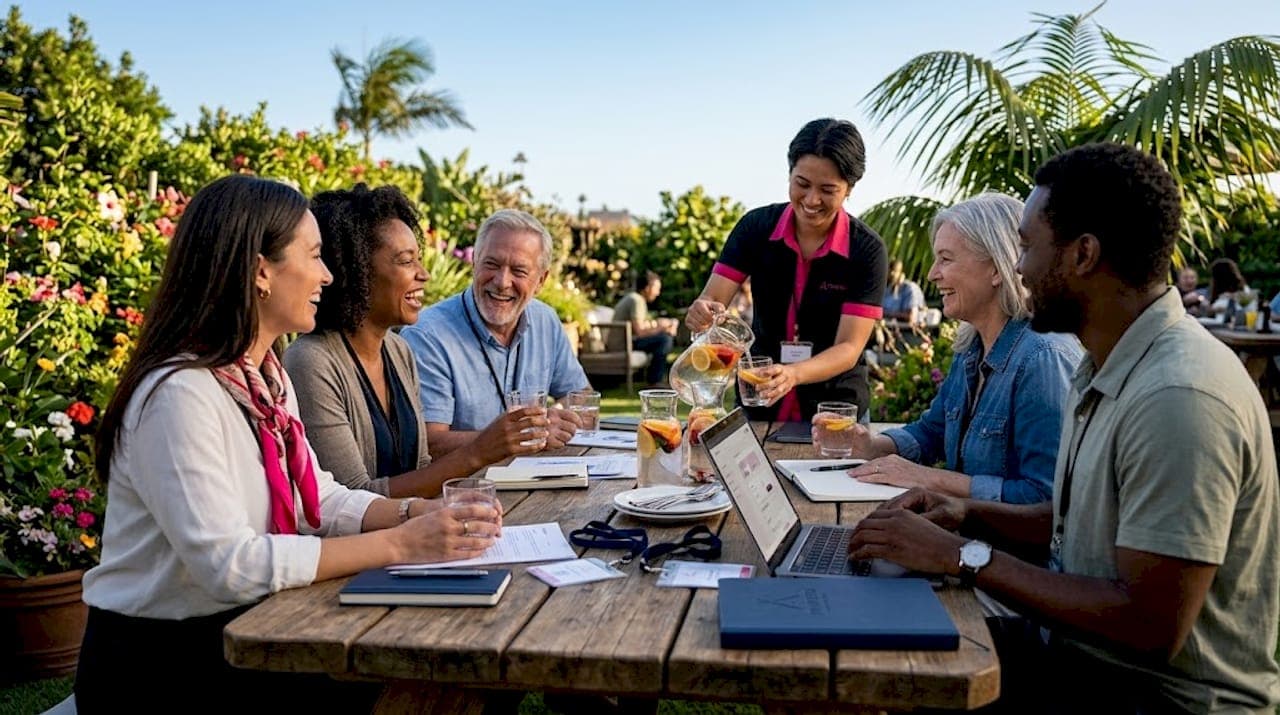
Choosing the right incentive retreat for your team is harder than it looks. The market is full of options, but most corporate leaders and HR professionals face the same frustrations: packages that feel generic, activities that don't connect to company culture, or price points that make the CFO wince. The best examples of incentive retreat packages share a common thread. They align experience design with business goals, whether that means rewarding top performers, accelerating new hire integration, or simply giving your team a reason to show up more engaged on Monday. This article breaks down real, varied package models so you can make a smarter decision.
Table of Contents
- Key takeaways
- 1. Examples of incentive retreat packages: luxury wellness edition
- 2. Festival-style Caribbean retreat with cultural immersion
- 3. Immersive corporate retreat with custom team-building rituals
- 4. Surf and outdoor adventure retreat package
- 5. Yoga and mindfulness retreat in a scenic coastal setting
- 6. Workation retreat blending productivity and local culture
- 7. Side-by-side comparison of featured incentive retreat packages
- 8. How to match retreat type to your company goals
- My honest take on incentive retreat trends
- Plan your next incentive retreat with TribYou - Your Places
- FAQ
Key takeaways
| Point | Details |
|---|---|
| Wellness retreats justify premium costs | High-end programs like Four Seasons Lanai deliver measurable wellbeing ROI through structured, holistic programming. |
| Cultural immersion drives bonding | Festival-style and culturally rich packages create deeper team connection than standard off-site events. |
| Custom rituals outperform generic activities | Company-specific traditions improve new hire integration and reinforce culture more effectively long-term. |
| Budget range is wide and scalable | Incentive packages span from $659 per person per day to $4,995-plus, accommodating varied corporate budgets. |
| Package type should match your goal | Align retreat format to specific objectives: motivation, wellbeing, onboarding, or cultural alignment. |
1. Examples of incentive retreat packages: luxury wellness edition
When budget is not the primary constraint, a luxury wellness retreat delivers the kind of experience your top performers will remember for years. The Four Seasons Resort Lanai in Hawaii offers one of the clearest examples of what premium incentive programming looks like at its best.
Their 4-day immersive wellness retreat starts at $4,995 per person and includes a carefully sequenced program built around physical recovery, mental clarity, and sensory experience. This is not a buffet of optional spa services. Every element is designed with intention.
What the package typically includes:
- Daily wellness classes covering yoga, breathwork, and guided movement
- Curated spa treatments with locally sourced ingredients
- Private meditation experiences and sound therapy sessions
- Access to a private observatory for stargazing events
- Chef-designed meals aligned to the wellness program's nutritional goals
- One-on-one consultations with wellness practitioners
For corporate clients, the value proposition goes beyond relaxation. Forward-thinking businesses in 2026 are prioritizing holistic experience design because it produces measurable outcomes in energy, morale, and retention. Sending your high performers to a luxury retreat signals genuine investment in their wellbeing, not just their output.
Pro Tip: When evaluating luxury wellness packages, ask the provider for the daily schedule before booking. A truly premium retreat has a programmed arc from arrival to departure, not a list of available add-ons.
2. Festival-style Caribbean retreat with cultural immersion
Not every incentive retreat needs to cost $5,000 per person to deliver a memorable experience. Festival-style group incentive travel examples from the Caribbean region show how cultural richness can be packaged affordably without sacrificing quality.
A standout example is the Dominican Republic's Cigars, Rum and Golf Festival package, which offers three-night options starting at $659 per person per day. For a mid-range corporate budget, the value density here is exceptional.
The package includes:
- Accommodation at a premium resort property
- All meals and unlimited premium drinks throughout the stay
- Airport transfers and ground logistics
- Festival admission with curated cultural programming
- Industry seminars and brand meet-and-greet sessions
- Structured group activities designed for peer connection
What makes this a strong team building retreat example is the built-in social infrastructure. Festival-format retreats remove the awkwardness of forced bonding. People interact naturally around shared experiences, whether that is a cigar rolling demonstration, a rum tasting, or a sunset golf round. The cultural setting of the Dominican Republic adds an additional layer of engagement that a hotel conference room simply cannot replicate.
This format scales well. Groups of 20 can participate with the same quality experience as groups of 200, making it a practical corporate retreat package option for companies at different growth stages.
3. Immersive corporate retreat with custom team-building rituals
Some of the most impactful retreat experiences for employees come from companies that stopped trying to copy what other organizations do and started designing traditions of their own. Buffer's approach to annual retreat planning is a widely referenced model in the corporate world because it replaces off-the-shelf team building with company-specific rituals.
Here is what distinguishes this retreat model from standard packages:
- Cultural presentations: Each team or department prepares a short presentation on a topic meaningful to them. These sessions create shared knowledge and genuine connection across functions.
- Themed team competitions: Challenges tied to company values rather than generic trivia or obstacle courses.
- Surprise activities: Unannounced experiences that create collective memory and team storytelling long after the retreat ends.
- Curated swag: High-quality branded items that reinforce company culture and serve as lasting physical reminders of the experience.
The impact on new hire integration is particularly notable. Custom retreat rituals accelerate bonding and embed company culture far more efficiently than standard onboarding programs. A new employee who experiences the company's annual retreat traditions within their first year builds a sense of belonging that is hard to manufacture any other way.
Pro Tip: When designing your own retreat rituals, start with one tradition and repeat it every year. Consistency is what transforms a single activity into a cultural touchstone.
4. Surf and outdoor adventure retreat package
For teams in active industries or organizations with younger workforces, outdoor adventure retreats deliver a combination of physical challenge, peer trust, and genuine fun that sits in its own category. Surf-based retreat experiences offer a particularly strong framework for team building because they require vulnerability, coaching, and collective celebration.
What makes surf retreat packages work as group incentive travel examples is the learning curve everyone shares. Nobody arrives as an expert. That shared beginner experience strips away hierarchy and creates real connection. It is hard to stay in "manager mode" when you are all falling off boards together.
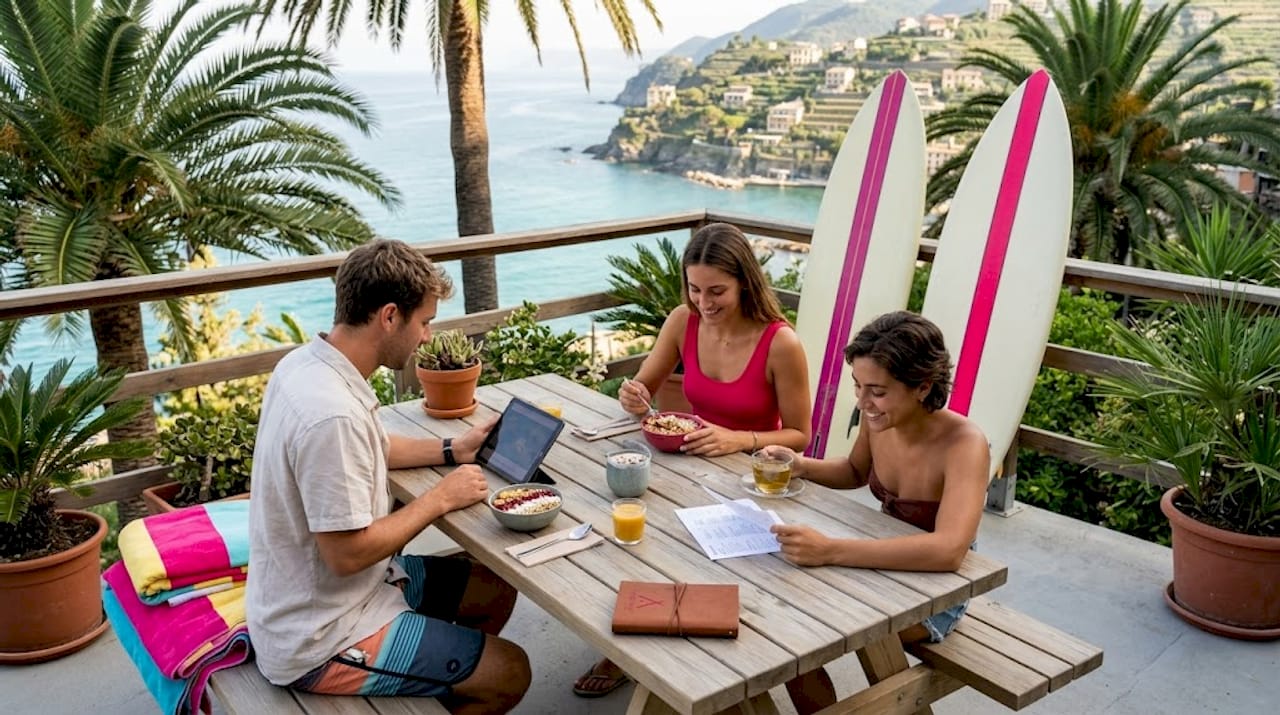
These packages typically include accommodation in a coastal property, daily surf lessons with professional instructors, wellness add-ons like yoga and breathwork, and curated meals. The multi-day format matters here. A one-day surf experience is an activity. A three-to-five-day surf retreat is a transformation.
5. Yoga and mindfulness retreat in a scenic coastal setting
Yoga and mindfulness-based incentive packages occupy a different space from pure adventure or luxury wellness. They appeal to teams where burnout is a real concern, where creative output is the primary business driver, or where leadership wants to signal a genuine commitment to mental health.
A well-structured yoga retreat program at a scenic coastal location combines daily practice with group reflection sessions, breathwork, and nature immersion. For corporate applications, the best versions of these packages build in specific sessions around team communication, collective intention setting, or values alignment.
The cost structure for yoga retreats is generally more accessible than luxury spa programs. This makes them a practical choice for larger groups or companies that want to offer incentive travel to a broader segment of employees rather than only top performers.
6. Workation retreat blending productivity and local culture
Workation retreats are one of the fastest-growing incentive trip package ideas in 2026 because they solve two problems at once. They reward employees with a change of environment while maintaining productivity, making them easier to justify to leadership than a purely leisure-based trip.
The best workation retreat packages are built around a destination with authentic character. Italy, for example, offers a combination of reliable infrastructure, cultural richness, and natural beauty that makes it one of the most requested locations for European corporate retreats. A well-designed Italian workation package might include a historic property in Tuscany or Sicily, curated coworking spaces, local culinary experiences, and structured afternoon excursions.
The programming balance matters. The most effective workation retreat packages allocate mornings to focused work, afternoons to shared local experiences, and evenings to social connection. This rhythm respects professional commitments while creating the conditions for genuine team bonding.
7. Side-by-side comparison of featured incentive retreat packages
Before deciding which format fits your organization, a direct comparison of the packages above helps clarify the trade-offs.
| Package type | Duration | Price per person | Core focus | Best for |
|---|---|---|---|---|
| Luxury wellness (Four Seasons Lanai) | 4 days | From $4,995 | Holistic wellbeing and recovery | Senior leaders, top performers |
| Caribbean festival (Dominican Republic) | 3 nights | From $659/day | Cultural immersion and social connection | Mid-to-large groups, varied budgets |
| Custom ritual retreat (Buffer model) | 4-7 days | $4,000-$4,500 est. | Culture building and onboarding | Distributed or remote-first teams |
| Surf adventure retreat | 3-5 days | Varies by location | Team trust and physical challenge | Active teams, younger workforces |
| Yoga and mindfulness retreat | 3-5 days | Accessible mid-range | Mental wellness and creative recovery | Burnout-prone or creative teams |
| Workation retreat (Italy model) | 5-7 days | Varies by property | Productivity plus cultural experience | Remote and hybrid teams |
This table reflects a key truth about corporate retreat package options: there is no single best answer. The right choice depends on what your team actually needs right now, not what sounds impressive in a board presentation.
8. How to match retreat type to your company goals
Selecting from the available examples of incentive retreat packages becomes much easier when you start with a clear goal rather than a budget number. Here is a practical framework for aligning package type to business objective:
- Reward and recognition: Luxury wellness or festival-style packages work well. The perceived value is high, and the experience feels like a genuine gift rather than a corporate obligation.
- New hire integration: Custom ritual retreats modeled on the Buffer approach create cultural immersion faster than any onboarding document.
- Burnout recovery and mental health: Yoga, mindfulness, and wellness-focused packages address root causes rather than offering a temporary escape.
- Distributed team cohesion: Workation retreats in culturally rich destinations create shared memories and working rhythms that persist after everyone returns home.
- High-performance culture reinforcement: Adventure-based retreats communicate that your company values resilience, growth, and collective challenge.
Budget is a real constraint, but it should not be the starting point. Retreats at $4,000 to $4,500 per person can deliver returns that a cheaper off-site never could, when the design is right.
My honest take on incentive retreat trends
I have watched the corporate retreat space shift considerably over the past several years. What I find most telling is the move away from retreats as pure escapism. The holistic shift in incentive travel toward experiences aligned with brand values and genuine wellbeing is not a trend. It is a correction.
For too long, corporate retreats were designed to look good in the post-event summary. Impressive venue photos, a team photo on a rooftop, a guest speaker most people forgot by the following Tuesday. What I have seen actually work is simpler and harder to fake. It is the retreat where someone from accounting and someone from product sit next to each other during a cooking class in Sicily and discover they share a problem no meeting ever surfaced. It is the annual ritual that new hires anticipate before they even join.
My strongest recommendation is to resist the temptation to choose a package because it photographs well. Choose it because it creates the conditions for real connection. The best retreat experiences for employees are the ones that change how people feel about coming to work, not just how they feel for four days in a nice hotel.
— Luca
Plan your next incentive retreat with TribYou - Your Places
If the examples above have given you a clearer picture of what your team needs, TribYou - Your Places can help you move from inspiration to execution.
TribYou - Your Places is a digital travel ecosystem built specifically for companies that want more than a venue booking. From luxury wellness programming in Italy to culturally rich workation retreats in hidden European destinations, every package is designed around your team's actual goals, not a generic template. The platform connects you with trusted local partners, experience providers, and carefully selected properties that deliver authentic engagement, not just logistics. Whether you are planning a 20-person leadership retreat or a 200-person incentive trip, explore bespoke corporate retreats with TribYou - Your Places and find the package that fits your team, your culture, and your ambitions.
FAQ
What are common examples of incentive retreat packages?
Common examples include luxury wellness retreats, festival-style cultural immersion trips, surf and adventure packages, yoga and mindfulness programs, and workation retreats. Each serves a different corporate objective, from top-performer recognition to new hire onboarding.
How much should a company budget for an incentive retreat?
Corporate retreat budgets vary widely. Entry-level festival packages start around $659 per person per day, while premium wellness programs begin at $4,995 per person. Companies like Buffer invest $4,000 to $4,500 per person for full-team retreats, treating it as a culture-building investment.
What makes an incentive retreat effective for team building?
The most effective team building retreat examples move beyond generic activities and incorporate cultural immersion, shared physical challenges, or company-specific rituals. Research consistently shows that emotional and cultural wellbeing in retreat design drives stronger engagement than traditional perks.
How do you choose the right incentive retreat for your team?
Start with your primary goal: reward, bonding, wellbeing, or cultural alignment. Then match the package format to that goal before setting a budget. A workation retreat serves distributed teams differently than a luxury spa program serves senior leaders.
Are workation retreats considered incentive travel?
Yes. Workation retreats are increasingly recognized as a legitimate group incentive travel example, particularly for remote and hybrid teams. They combine a change of environment with maintained productivity, making them easier to justify internally while still delivering a meaningful reward.