

Most corporate retreats fail at wellness before the first session begins. Not because the location is wrong or the budget is too small, but because wellness elements in corporate retreats get treated as decoration. A yoga class bolted onto a packed agenda. A smoothie bar next to the coffee station. These additions feel good in a proposal deck, but they don't move the needle on well-being, focus, or team cohesion. This article cuts through the noise and gives you a practical, evidence-based framework for choosing retreat wellness components that deliver real results. You'll learn what works, what to skip, and how to design a retreat your team will actually talk about.
Table of Contents
- Key Takeaways
- 1. A framework for choosing the right wellness elements in corporate retreats
- 2. Mindfulness and breathwork for mental clarity
- 3. Physical wellness elements that serve all fitness levels
- 4. Nutrition and sleep education for sustained team energy
- 5. Digital detox and technology management
- 6. Social connection and team cohesion activities
- My honest take on wellness-washing in corporate retreats
- Plan your next retreat with TribYou - Your Places
- FAQ
Key Takeaways
| Point | Details |
|---|---|
| Goals before activities | Define sharp business and well-being objectives before selecting any wellness element. |
| Pacing over programming | Limit structured content to around 60% of the day to protect genuine recovery time. |
| Integration beats add-ons | Weave wellness into the agenda flow rather than scheduling it as a separate block. |
| Inclusion is non-negotiable | Choose activities accessible to all fitness levels and comfort levels to avoid exclusion. |
| Post-retreat habits determine ROI | Benefits dissipate quickly without a plan to embed wellness behaviors back into daily work. |
1. A framework for choosing the right wellness elements in corporate retreats
Before you pick a single activity, you need a filter. Not every wellness option belongs in every retreat. Clear retreat objectives shape location, agenda, and activities that actually connect to your business goals. Without that foundation, you are selecting experiences by aesthetics rather than outcomes.
Apply four criteria to evaluate any wellness element you are considering:
- Goal alignment: Does this activity directly support what the retreat is designed to achieve? A team managing burnout needs restoration, not a high-intensity challenge course.
- Restoration potential: Does it genuinely reduce mental or physical load, or does it just look like wellness?
- Inclusivity: Can every participant engage comfortably, regardless of fitness level, age, or cultural background?
- Integration: Can it be woven into the natural rhythm of the day, or does it require participants to shift context completely?
Over-programming is one of the most damaging mistakes retreat planners make. Participants leave more exhausted than when they arrived. A schedule packed with sessions leaves no room for the casual conversations, quiet reflection, and mental decompression that actually restore people.
Pro Tip: Limit structured programming to roughly 60% of the retreat day and protect the remaining 40% as unscheduled time. This is not empty space. It is the space where real recovery and spontaneous connection happen.
2. Mindfulness and breathwork for mental clarity
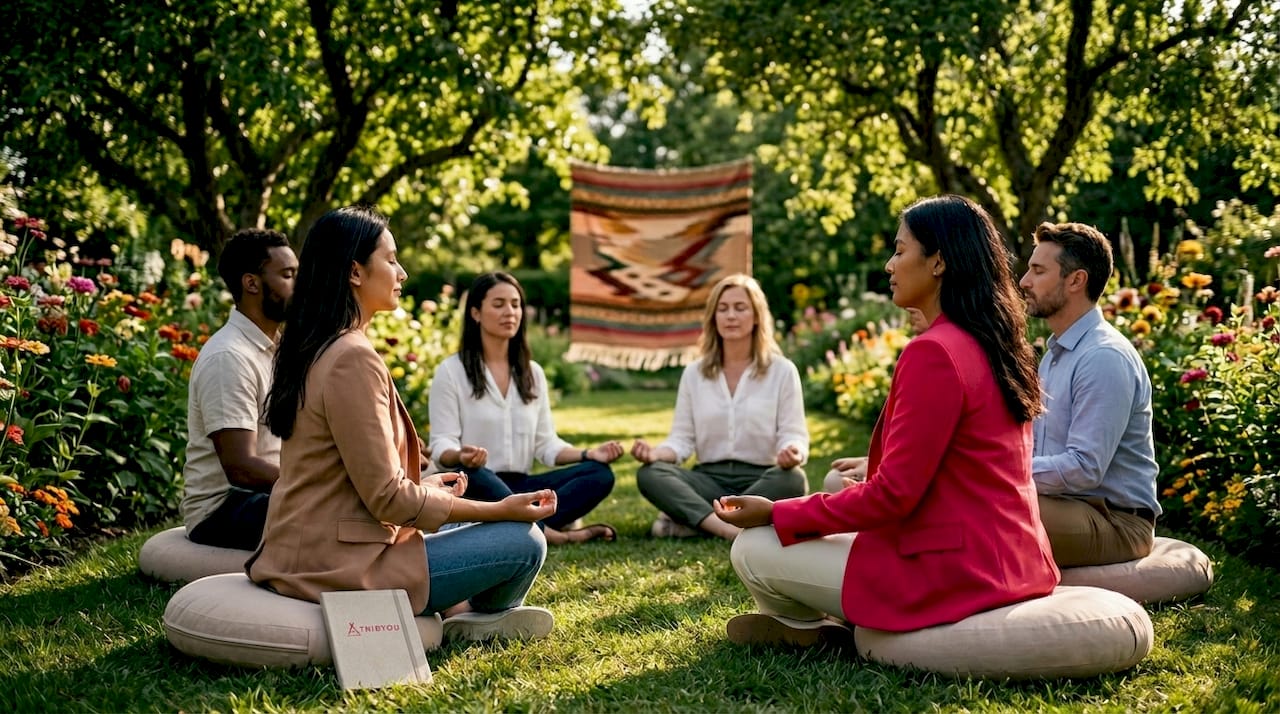
Mindfulness practices are no longer a wellness trend. They are core retreat wellness tools that improve focus, reduce stress, and support emotional regulation across an entire retreat day. The key is how you position them. A mandatory 45-minute silent meditation before breakfast will alienate half your group. Short, well-placed resets woven into the agenda work far better.
Effective mindfulness options for corporate retreat contexts include:
- Guided morning meditation (10 to 15 minutes): Sets a calm, focused tone before the day begins. Optional participation encourages comfort.
- Breathwork resets between sessions: Three to five minutes of guided breathing between working blocks help participants transition mentally and sustain energy.
- Body scan exercises: Brief practices that help participants reconnect with physical sensations and release accumulated tension.
- Mindful walking segments: Scheduled outdoor walks framed as active reflection time, not exercise.
The design principle here is frequency over duration. Short, repeated practices integrated throughout the day outperform one long session that feels like a performance exercise. This approach is also far more accessible to participants who may be skeptical of formal meditation.
Pro Tip: Brief breathwork resets between working sessions help sustain energy and clarity far more effectively than a single dedicated wellness block. Frame them as "mental transitions" rather than meditation to reduce resistance.
3. Physical wellness elements that serve all fitness levels
Physical wellness activities are among the most impactful wellness activities for teams, provided they are designed for access rather than performance. The goal is not athletic achievement. It is to help participants release physical tension, improve circulation, and support the cognitive clarity that carries through working sessions.
Prioritize these movement and recovery modalities:
- Gentle yoga or mobility sessions: Morning or evening options that address posture, tension, and breathing. Chair-based modifications make these accessible to everyone.
- Nature walks and light hiking: Outdoor movement combined with fresh air and visual change has a measurable restorative effect on attention and mood.
- Stretching and movement breaks: Five to ten minutes of guided movement between long seated sessions prevents fatigue and supports focus.
- Recovery modalities: Contrast hydrotherapy, infrared sauna, and PEMF therapy are emerging as serious corporate retreat programming options, particularly for senior leadership retreats focused on performance and longevity.
Operationally, physical wellness requires intentional scheduling. Morning movement works well before breakfast. Recovery therapies are best positioned after the main working block of the day. If your retreat venue includes dedicated facilities, build them into the agenda rather than listing them as optional extras. Optional extras rarely get used.
For retreats that incorporate wearable-based personalization, physical wellness programming can be tailored to individual recovery data, which significantly increases participant engagement and perceived value.
4. Nutrition and sleep education for sustained team energy
Food and sleep are the two most powerful drivers of cognitive performance during a retreat. Yet most retreat planners treat them as logistical details rather than wellness elements. Choosing the right catering and including a short sleep education session can produce measurable differences in participant energy, mood, and decision quality across the entire program.
Key components to consider:
- Retreat nutrition design: Work with your venue to prioritize meals that support cognitive function. High-protein breakfasts, low-glycemic lunch options, and mid-afternoon snacks that avoid energy crashes are not luxury choices. They are performance investments.
- Nutrition workshops: A 30-minute session with a nutritionist showing participants how food choices affect focus and stress resilience provides tools they carry back to work.
- Sleep hygiene sessions: Nutrition and sleep education workshops give employees practical tools to combat burnout and improve workplace focus long after the retreat ends.
- Evening wind-down rituals: Light herbal teas, reduced screen exposure after dinner, and calm evening programming signal the nervous system that the day is ending.
The business case for this investment is strong. Retreats that address sleep and nutrition are structured to help companies combat burnout and improve sustained workplace performance, not just provide a temporary energy lift. When participants leave with practical habits, the retreat's return on investment extends across months, not just days.
5. Digital detox and technology management
Device-free time is consistently reported as one of the most impactful single elements participants experience in a corporate retreat context. It sounds simple. In practice, it requires clear policy, cultural buy-in, and confident facilitation.
Here is how to design digital detox into your retreat effectively:
- Define device-free zones: Meeting rooms, dining areas, and outdoor spaces can be designated technology-free without restricting access entirely.
- Communicate policies in advance: Participants need to arrange coverage before the retreat begins. Surprise restrictions create anxiety rather than rest.
- Staged detox approach: Some retreats enforce device restrictions by day two to improve sleep and reinforce routine changes progressively rather than abruptly.
- Replace screen time with alternatives: Provide books, journaling materials, card games, or curated conversation cards to make device-free periods engaging rather than uncomfortable.
For corporate offsite programs, digital detox programming works best when it is framed positively, as protected thinking time or genuine recovery, rather than as a restriction. Operational support matters too. Document your technology policy alongside conduct and social sharing guidelines to reliably create psychological safety for the entire group.
Pro Tip: Give participants a brief orientation session explaining the neuroscience behind device-free time. When people understand that constant connectivity keeps their stress response activated, they become willing partners rather than reluctant participants.
6. Social connection and team cohesion activities
Social wellness is one of the most underestimated team building wellness strategies available to HR professionals. The goal is not forced bonding. It is creating conditions where authentic connection can happen naturally, without pressure or performance expectations.
Effective social wellness elements include:
- Shared meals with conversation prompts: Curated questions placed at the table shift dinner from small talk to genuine exchange.
- Light group games and collaborative challenges: Low-stakes activities that create shared laughter and informal interaction build trust more reliably than structured exercises designed to simulate vulnerability.
- Storytelling circles: Short, optional formats where participants share a meaningful professional or personal experience create unexpected depth and mutual understanding.
- Cooking classes or local cultural experiences: Shared activities grounded in place create natural collaboration and a collective memory that outlasts the retreat itself.
| Activity type | Best for | Caution |
|---|---|---|
| Conversation prompt dinners | Building intellectual connection | Keep prompts professional and inclusive |
| Collaborative cooking | Informal team interaction | Check dietary needs and mobility in advance |
| Storytelling circles | Creating psychological safety | Always make participation optional |
| Local cultural experiences | Shared memory and authentic engagement | Align with destination to avoid tokenism |
Social connection activities that avoid forced vulnerability and encourage authentic interaction are measurably more effective for team cohesion than high-pressure team challenges. The principle is simple: connection follows safety. Design for safety first.
My honest take on wellness-washing in corporate retreats
I have reviewed dozens of corporate retreat proposals, and I can identify wellness-washing in under two minutes. The tell is always the agenda. When every hour is accounted for and wellness appears as a 60-minute block between two work sessions, the retreat has not been designed around well-being. It has been designed around productivity, with a wellness veneer applied afterward.
What I have learned from working with teams across different industries is that the most transformative retreats are usually the least flashy. They do not have the most impressive amenity list. They have margin. They have transitions. They protect unscheduled time like it is a deliverable, because it is.
The hardest conversation I have with retreat planners is convincing them that doing less is the strategy. Without post-retreat behavioral integration, the benefits of even a genuinely well-designed retreat dissipate within weeks. The retreat must be paired with a simple re-entry plan: one or two practices participants commit to continuing, supported by a brief check-in within 30 days.
Wellness-washing can be identified by the absence of pacing and recovery mechanics. Real corporate wellness programming describes agenda margin and integrates wellness tools beyond amenities. Before you sign any retreat proposal, ask the vendor to walk you through how unstructured time is protected. The answer will tell you everything you need to know.
— Luca
Plan your next retreat with TribYou - Your Places
If you are ready to move from wellness concepts to a retreat your team will genuinely value, TribYou - Your Places is built for exactly this work.
TribYou - Your Places curates corporate wellness retreats that integrate evidence-based wellness programming with authentic destination experiences across Italy and beyond. From agenda design and venue selection to on-the-ground facilitation, every detail is built around your team's specific goals, not a generic template. Your team deserves a retreat that restores real energy, builds genuine connection, and produces habits that last. Discover what a purposefully designed retreat looks like when wellness is built in from the first planning conversation.
FAQ
What are the most impactful wellness elements for corporate retreats?
Mindfulness resets, structured digital detox periods, and inclusive physical movement sessions consistently produce the highest participant satisfaction. Social connection activities designed around authentic interaction rather than performance are equally effective for team cohesion.
How do you avoid over-programming a corporate wellness retreat?
Limit structured activities to approximately 60% of the retreat day and treat the remaining time as protected recovery space. Over-programming is one of the most common causes of participant exhaustion in otherwise well-planned retreats.
Why is digital detox effective during a corporate retreat?
Device-free periods reduce the constant activation of the stress response caused by notifications and task-switching. Digital detoxes are frequently cited by participants as the single most impactful retreat element for achieving genuine mental reset.
How do wellness retreat benefits extend beyond the retreat itself?
Benefits are sustained when participants leave with one or two concrete habits to continue, supported by a structured check-in within 30 days. Without post-retreat integration, even the best retreat experiences tend to fade quickly.
What makes a corporate wellness retreat inclusive?
Inclusive retreat wellness offers participation options across fitness levels, comfort levels, and cultural backgrounds. Activities should always allow optional engagement, and physical sessions should include modifications so every participant can take part without feeling excluded.