

Annual team retreats are planned through a structured, multi-phase process that begins with goal alignment, moves through venue selection and agenda design, and closes with a post-retreat action plan that holds teams accountable. The difference between a retreat that shifts culture and one that fades from memory within a week comes down to intentional planning at every stage. Business leaders and HR professionals who treat retreat planning as a strategic operating system, not a one-time event, consistently see stronger team cohesion, clearer priorities, and measurable outcomes. This guide covers every phase of that process, from the first kickoff meeting to the 30-day follow-up.
How annual team retreats are planned: goals and vision first
The foundation of any successful retreat is a clear answer to one question: what does the organization need from this experience? Without that answer locked in early, every subsequent decision, from venue to agenda, risks serving the wrong purpose.
The most effective starting point is a short kickoff meeting. One planning framework recommends a focused 30-minute session to align on retreat format, rough budget, headcount, and the two or three decisions that need to be made before anything else moves forward. This meeting prevents scope creep and stops the planning process from expanding in every direction before the basics are settled.
Retreat types fall into three broad categories, and each requires a different planning emphasis:
- Strategic retreats focus on annual planning, OKR setting, or major organizational decisions. They require more structured work time and senior leadership facilitation.
- Cultural retreats prioritize connection, trust-building, and team identity. They lean heavily on shared experiences and informal interaction.
- Developmental retreats center on skill-building, training, or leadership growth. They need expert facilitators and dedicated learning blocks.
Defining which type you are planning shapes every choice that follows. A cultural retreat in the Dolomites looks nothing like a strategic planning offsite in Milan. Knowing your type early prevents misaligned expectations.
Pro Tip: Set two or three measurable success metrics before the retreat, not after. Examples include: percentage of attendees who report stronger cross-team relationships, number of strategic decisions finalized, or completion rate of post-retreat commitments at the 30-day check-in.
What venue selection and pre-retreat logistics actually involve
Venue selection is not just a location decision. The physical environment sets the psychological tone for everything that happens inside it. A conference room in a city hotel signals work. A restored farmhouse in Tuscany signals openness, creativity, and connection. The venue communicates intent before a single agenda item is shared.
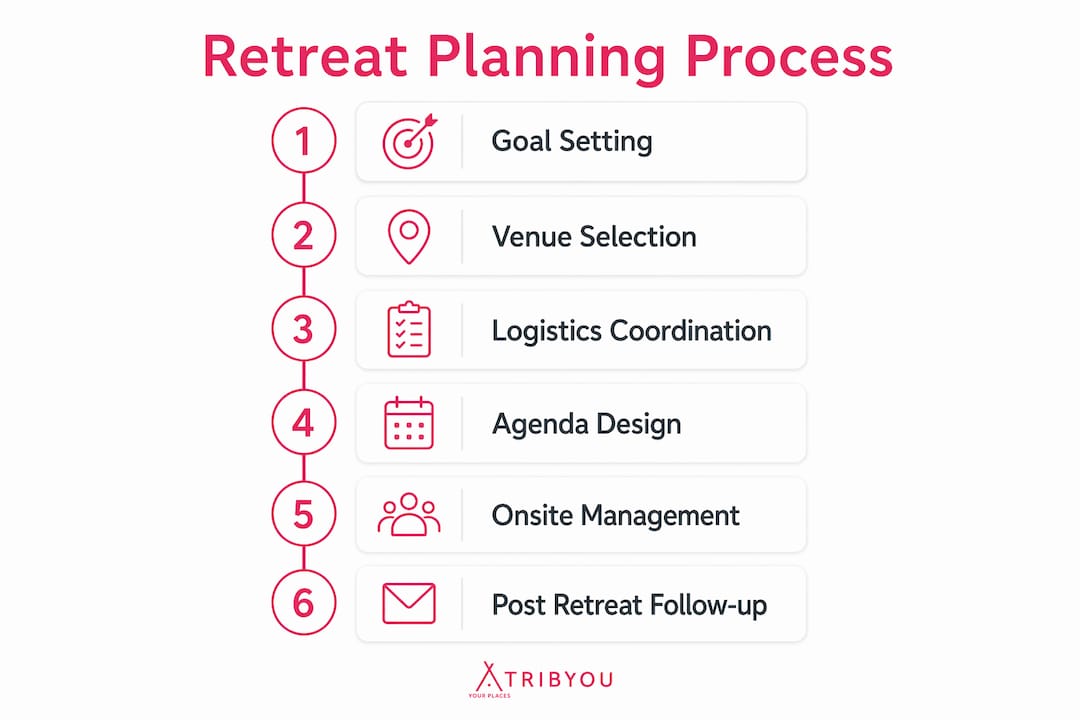
Booking 6 to 9 months in advance is the standard for popular venues, particularly in peak seasons. Waiting until three months out limits your options and increases costs. For teams of 20 or more, this timeline is non-negotiable.
When evaluating venues, weigh these factors in order:
- Alignment with retreat goals. A venue that supports your retreat type, whether that means breakout rooms for strategy sessions or outdoor space for team activities, is more valuable than one that simply looks impressive.
- Accessibility for all attendees. Consider travel time from major hubs, accessibility requirements, and whether the venue can accommodate dietary restrictions and mobility needs.
- Technical infrastructure. Reliable Wi-Fi, AV equipment, and adequate power access matter more than most planners anticipate until they are standing in a room with 40 people and a projector that does not work.
- Contract flexibility. Understand cancellation policies, minimum spend requirements, and what is included versus charged separately.
Here is a quick comparison of venue types and their typical trade-offs:
| Venue type | Best for | Key trade-off |
|---|---|---|
| Hotel conference center | Large groups, urban access | Lower authenticity, higher cost |
| Rural retreat property | Culture and connection focus | Logistics complexity, limited tech |
| Boutique agriturismo (Italy) | Authentic experience, small teams | Capacity limits, advance booking required |
| Co-working retreat space | Hybrid work teams, productivity focus | Less immersive, fewer social spaces |
Collecting attendee preferences early is equally important. A detailed intake form with a hard cutoff date prevents the last-minute dietary requests and accessibility surprises that derail vendor coordination. Treat this data collection like a logistics problem with a deadline, not an open-ended survey.
Pro Tip: When evaluating workation destinations or retreat venues, review the key selection factors that experienced teams use to match location to group size, work style, and cultural goals.
What is the best approach to designing a balanced retreat agenda?
The most common agenda mistake is over-scheduling. When every hour is filled, attendees arrive at dinner exhausted and leave the retreat feeling like they worked harder than they do at the office. The goal is energy management, not time management.

The 30/40/30 structure provides a proven framework: 30% structured work sessions, 40% team activities, and 30% free time. Research supporting this model found that 85% of retreat attendees want some unscheduled free time, and 89% prefer optional rather than mandatory activities. These numbers confirm that autonomy and breathing room are not luxuries. They are requirements for genuine engagement.
Scheduling decisions should also account for energy cycles:
- Place high-focus strategic sessions in mid-morning and early afternoon, when cognitive performance peaks for most groups.
- Schedule physical or outdoor activities after lunch, when energy dips naturally and movement helps reset attention.
- Reserve evenings for informal social time, shared meals, or optional experiences that allow people to connect without an agenda.
Varied formats within work sessions also sustain engagement. Rotating between large-group presentations, small-group workshops, and individual reflection time prevents the mental fatigue that comes from sitting in one mode for hours. Buffer, which has hosted 14 retreats over 12 years, treats the agenda as an evolving system where the structure stays consistent but the specific activities adapt to the team's current needs.
Pro Tip: Build at least one completely unstructured block of 90 minutes or more into each full retreat day. Teams that have this space consistently report higher satisfaction and more organic relationship-building than those on packed schedules.
How communication and execution are managed before and during the retreat
Clear communication before the retreat reduces anxiety, increases readiness, and signals that the organization takes the experience seriously. Sending centralized retreat resources including the full agenda, FAQs, packing suggestions, and travel instructions four to six weeks before arrival gives attendees enough time to prepare without creating an information overload.
A structured pre-retreat communication timeline looks like this:
- Eight to ten weeks out: Confirm dates, location, and travel logistics. Send the intake form with a hard deadline.
- Four to six weeks out: Share the draft agenda, venue details, and any pre-work or reading materials.
- Two weeks out: Send a final confirmation with arrival instructions, room assignments, and a contact number for day-of questions.
- Day before: Send a brief reminder with the first-day schedule and any last-minute updates.
Onsite execution requires its own dedicated resource. Assigning a logistics-only coordinator on the day of the retreat allows the agenda facilitator to stay focused on content and group dynamics. When one person is managing both roles, something always suffers. The facilitator gets pulled away to handle a catering issue, or the logistics fall apart because no one is watching them.
Pre-retreat walkthroughs of meeting spaces, including technical and AV setup, should happen before attendees arrive. Discovering that the projector needs a different cable after 40 people are seated is avoidable. Swag distribution, name tags, and welcome materials should also be staged and ready at arrival points to create a smooth first impression.
Pro Tip: Create a single shared document or app-based resource hub that all attendees can access on their phones. Include the agenda, venue map, emergency contacts, and activity sign-ups. This eliminates the flood of individual questions that consume coordinator time on day one.
Why post-retreat follow-up is where results are actually made
The retreat ends. The real work begins. Without a structured follow-up process, even the most energizing offsite fades into a pleasant memory with no lasting organizational impact.
Sending a comprehensive action plan within 48 hours of the retreat's close is the single most effective follow-up practice. This document should include every decision made, the owner responsible for each commitment, and a clear deadline. Vague action items with no owner are not action items. They are intentions.
The follow-up structure that consistently drives accountability includes:
- A written summary of all decisions and commitments distributed within 48 hours
- A scheduled 30-day check-in meeting to review progress on commitments before momentum fades
- A feedback survey sent within one week while the experience is still fresh
- A public acknowledgment of completed commitments to reinforce accountability and celebrate progress
"Collecting feedback while memory is fresh leads to better planning and accountability." Purple Wave Creative
Post-retreat feedback also directly improves future retreats. Teams that systematically collect and act on participant input build a planning muscle over time. Each retreat becomes more precise because the planning process incorporates real data from the people who attended.
Key takeaways
Successful annual retreat planning requires goal clarity, early logistics commitment, a balanced agenda, and a structured follow-up process to convert retreat energy into lasting organizational outcomes.
| Point | Details |
|---|---|
| Start with a kickoff meeting | Lock in goals, budget, headcount, and format in 30 minutes to prevent scope creep. |
| Book venues 6 to 9 months early | Early commitment protects options and avoids rushed, costly decisions. |
| Use the 30/40/30 agenda rule | Divide time between structured work, team activities, and free time for maximum engagement. |
| Assign a logistics-only coordinator | Separating logistics from facilitation protects the quality of both roles onsite. |
| Send the action plan within 48 hours | Decisions with named owners and deadlines are the only kind that produce results. |
What I have learned after planning retreats across multiple continents
I have seen retreats that cost significant budgets deliver almost nothing, and I have seen modest offsites in rural Italian properties change the trajectory of a team for an entire year. The difference is almost never the venue or the budget. It is always the intentionality behind the planning.
The shift to remote and hybrid work has made annual retreats more consequential, not less. When teams spend most of the year communicating through screens, the in-person retreat carries the weight of all the relationship-building that used to happen organically in an office. That is a lot to ask of two or three days. The only way to meet that expectation is to plan with precision and leave room for the unexpected.
What I have found most undervalued is the cultural dimension of venue selection. Placing a team in an environment that is genuinely different from their daily context, a working farm in Umbria, a coastal village in Sicily, a mountain lodge in the Alps, activates a different mode of thinking and relating. The place itself becomes part of the experience. That is not a luxury consideration. It is a strategic one.
The follow-up is where most organizations leave value on the table. A 48-hour action plan and a 30-day check-in are not administrative tasks. They are the mechanism that converts retreat energy into organizational change. Skip them, and you have paid for a very expensive team dinner.
— Luca
Plan your next retreat with TribYou - Your Places
TribYou - Your Places works with business leaders and HR professionals to design and execute team retreats that combine strategic purpose with authentic local experiences. From curated venues across Italy to full logistics coordination and agenda support, the platform removes the complexity of retreat planning so your team can focus on what matters.
Whether you are organizing a cultural offsite in Tuscany, a strategic planning retreat in the Dolomites, or an incentive retreat package for a high-performing team, TribYou - Your Places connects you with the right places, partners, and experiences. Explore curated retreat experiences and start planning a retreat your team will remember and act on.
FAQ
What is the first step in planning an annual team retreat?
The first step is a short kickoff meeting to align on retreat goals, format, budget, and headcount. Locking in these four elements early prevents scope creep and ensures every subsequent decision serves a clear purpose.
How far in advance should you book a retreat venue?
Venues should be booked six to nine months in advance, especially for popular properties or peak travel seasons. Earlier commitment protects your options and reduces costs.
What is the 30/40/30 retreat agenda formula?
The 30/40/30 formula divides retreat time into 30% structured work sessions, 40% team activities, and 30% free time. Research shows that 85% of attendees want unscheduled time and 89% prefer optional activities, making this balance a practical standard.
How do you maintain momentum after a team retreat ends?
Send a written action plan within 48 hours that includes all decisions, named owners, and deadlines. Schedule a 30-day check-in before the team returns to full routine to review commitment progress and reinforce accountability.
How do you measure whether a team retreat was successful?
Define two or three measurable outcomes before the retreat, such as decision completion rates, participant satisfaction scores, or relationship quality metrics. Collect feedback within one week while the experience is fresh, and track commitment completion at the 30-day check-in.