
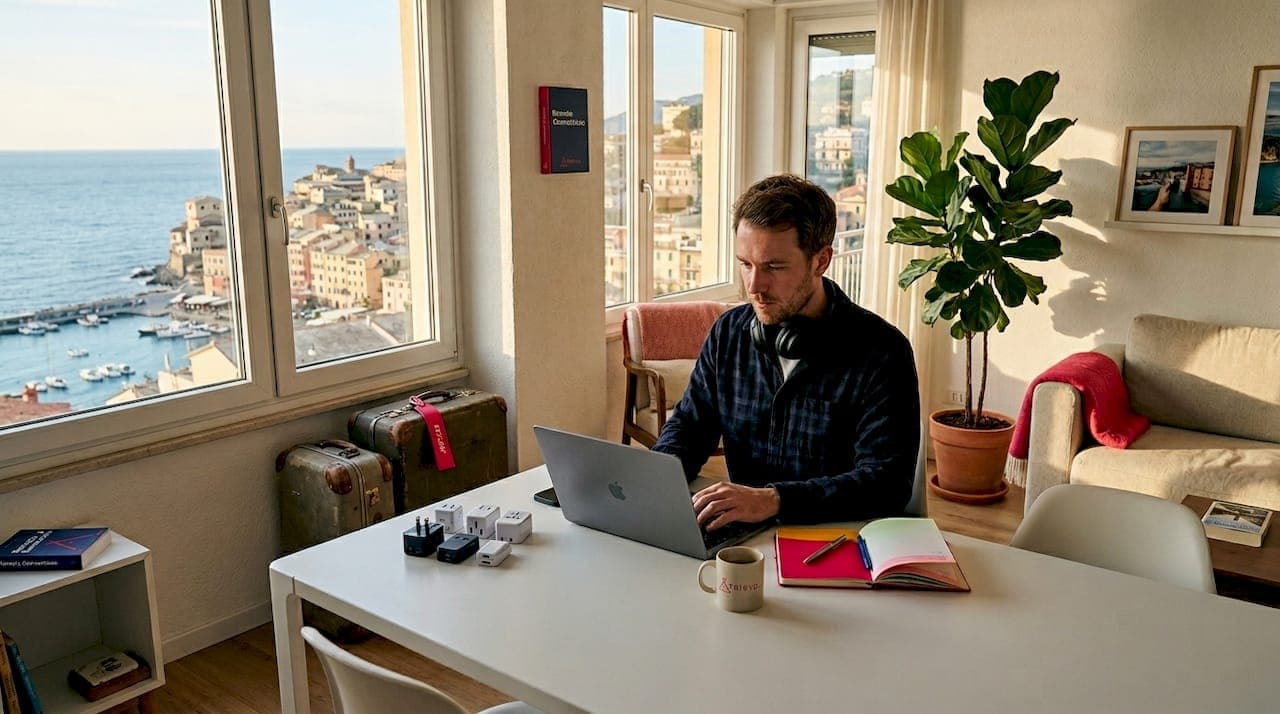
Most people assume workation destination choice comes down to nice weather and affordable rent. It does not. How workation destinations are chosen is far more complex, driven by infrastructure realities, visa requirements, time zone math, and the quality of your non-working hours. Get one of those wrong and you end up in a gorgeous location where your calls cut out, your visa is questionable, and your team is frustrated. This article breaks down every factor that actually matters, with concrete guidance for both solo remote workers and teams planning their next retreat.
Table of Contents
- Key takeaways
- How workation destinations are chosen: the logistical foundation
- Lifestyle and experiential criteria for choosing workation spots
- Team-specific considerations when choosing workation spots
- A practical framework for evaluating workation destinations
- My honest take on picking workation destinations
- Find your ideal workation with TribYou - Your Places
- FAQ
Key takeaways
| Point | Details |
|---|---|
| Internet comes first | 65% of workationers rank reliable internet as their top accommodation priority, above price and scenery. |
| Visa rules vary widely | Monthly income thresholds for digital nomad visas range from $3,040 in Spain to $3,930 in Portugal, so check requirements before booking. |
| Start with your calendar | Analyzing your meeting schedule before picking a destination prevents costly time zone conflicts. |
| Team trips need transparency | Clear communication about working hours and availability is what separates a productive team workation from a chaotic one. |
| Community beats attractions | The best workation spots are often discovered through personal networks, not travel lists. |
How workation destinations are chosen: the logistical foundation
Before anything else, the practical infrastructure of a destination determines whether remote work is even possible there. This is where most planning errors happen, because people research a city the way a tourist would, not the way a remote worker should.
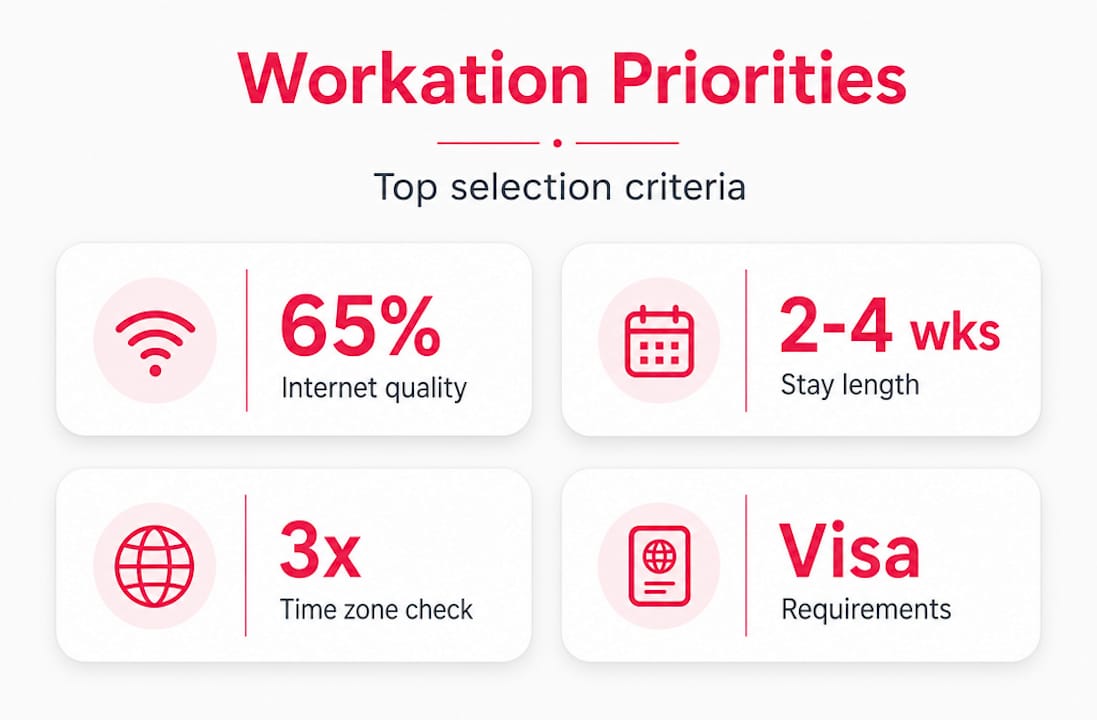
Internet and workspace quality sit at the top of every serious workation checklist. According to current data, 65% of workationers prioritize reliable internet and 63% prioritize a suitable workspace when choosing accommodation. Those numbers tell a clear story: connectivity is not a nice-to-have. It is the baseline. Experienced remote workers do not rely on hotel Wi-Fi as their primary connection. Instead, they book near coworking spaces to keep their productivity consistent regardless of where they sleep.
Visa and legal requirements are the second major filter. The digital nomad visa landscape has expanded significantly, but the income thresholds are real barriers. Spain requires $3,040 per month, Portugal requires $3,930, and Hungary sits at $3,200. These figures change, so always verify current thresholds directly with the relevant consulate before committing to a booking.
Time zone compatibility is the factor most commonly underestimated. Founders and remote teams increasingly filter destinations by their overlap with key business hours, because a single daily call at 2 a.m. is enough to make a workation feel worse than staying home. Central European Time works well for teams collaborating with both the U.S. East Coast and Asian markets, which explains why destinations like Lisbon, Valencia, and Tbilisi appear on so many workation shortlists.
Stay duration also shapes which destination makes sense. 36% of workationers prefer 1 to 2 week stays, while 32% prefer 3 to 4 weeks. Shorter stays favor destinations that are logistically easy to reach and require no visa changes. Longer stays open up countries with dedicated nomad visa programs that offer more legal clarity and often better accommodation value.
Pro Tip: Before researching any destination, run a simple test: map your three most critical weekly meetings against potential local times. If two of them fall after 10 p.m. or before 7 a.m., cross that destination off the list first.
Lifestyle and experiential criteria for choosing workation spots
Infrastructure gets you to the desk. But lifestyle quality determines whether you want to stay, whether your energy holds up, and whether the experience is worth doing again.

The balance between working hours and genuinely restorative non-work time is what separates a workation from a frustrating hybrid of two things done poorly. Committing to a structured morning work block, typically four focused hours, protects the afternoon for real exploration without guilt. This structure is what makes the experience sustainable rather than exhausting.
Local culture and authentic experiences play a larger role in destination satisfaction than most planning frameworks acknowledge. A destination where you can eat at a local market, join a cooking class, or hike a trail that locals actually use offers something qualitatively different from a resort bubble. This is why places like Montenegro's Bay of Kotor and Spain's Valencia keep appearing in recommendations from experienced workationers rather than from mainstream travel lists.
"The best workation spots are often discovered through personal networks and community, not through curated travel lists. Seasoned nomads value word-of-mouth recommendations over any algorithm." Nomio remote tribe blog
Community and networking deserve specific attention, especially for solo remote workers. A destination with an active expat or nomad community means you have access to local knowledge, recommendations, and the kind of casual professional conversation that keeps creative thinking alive. Local community networks consistently define workation quality more than tourist attractions do. Montenegro is a strong example. It is not a traditional workation hotspot, but it has a tight community of remote workers, low costs, and extraordinary natural surroundings that make it deeply appealing to those who find it through word of mouth.
The lifestyle factors most consistently cited by experienced workationers include:
- Access to varied, quality local food (not just tourist restaurants)
- Walkability or easy access to outdoor activities
- A visible community of other remote workers or freelancers
- Cultural programming or local events during evening hours
- A sense of safety and general ease of daily life
Team-specific considerations when choosing workation spots
Choosing a workation destination for a team operates on a different logic than solo planning. The stakes are higher, the coordination is more complex, and the wrong choice affects everyone's output and wellbeing simultaneously.
Here is a structured way to approach team-specific destination criteria:
- Map the team's working hours first. Before any destination is proposed, identify the overlap window where all team members need to be available. This single step eliminates more bad destinations than any other filter.
- Assess accommodation for group work patterns. The space needs to support both collaboration and focused solo work. This means shared meeting areas and private rooms or nooks where individuals can take calls without disrupting others.
- Verify local workspace options. Even for teams staying in a villa or apartment, access to a nearby coworking space gives members an alternative environment, which improves focus and reduces the friction of working in close quarters all day.
- Research local hospitality and team-friendly amenities. Some destinations are simply better equipped for groups. Destinations with hospitality infrastructure designed for team stays tend to offer more support for scheduling, catering, and workspace configuration.
- Plan for shared experiences deliberately. The team retreat value comes from structured time together outside of work. Research what the destination offers for group activities before booking, not after arriving.
Transparent communication about availability is what keeps a team workation from fracturing into disconnected individual experiences. Oyster HR's research emphasizes that sharing your planned working hours and location context builds trust across the team. When people know when their colleagues are available and what time zone they are operating in, coordination becomes easier and resentment does not build.
Pro Tip: Create a shared team document before the trip that lists each member's core hours, local time zone offset, and any hard commitments like client calls. Update it weekly. This single document saves hours of scheduling confusion.
A practical framework for evaluating workation destinations
Understanding the criteria is one thing. Applying them systematically is another. Here is how to move from research to a confident decision.
| Evaluation factor | What to verify | Where to check |
|---|---|---|
| Internet quality | Average speeds, coworking space locations | Nomad-specific forums, Google Maps |
| Visa requirements | Income thresholds, stay limits, application timelines | Official government sites, nomad visa databases |
| Time zone fit | Overlap with your key meetings | World Time Buddy, your calendar app |
| Cost of living | Monthly budget for accommodation, food, workspace | Numbeo, recent traveler blogs |
| Community presence | Active nomad or expat networks | Local Facebook groups, Meetup, coworking site communities |
| Team amenities | Group-capable accommodation, meeting spaces | Specialized booking platforms, local operators |
Once you have filled in that table for two or three candidate destinations, the decision usually becomes obvious. The destination that scores well across infrastructure, visa, and time zone will almost always be the right choice, even if it is less photogenic than the alternatives.
A few additional steps matter before you finalize:
- Book workspace before accommodation. Identify a coworking space you want to use, then find housing nearby. Reversing that order is a common mistake that leaves people commuting across a city.
- Check accommodation review scores for remote-work-specific feedback. Look for mentions of Wi-Fi reliability, desk space, and quiet. Generic positive reviews tell you almost nothing about workability.
- Build a contingency plan. Know the nearest coworking space with day passes and the nearest mobile data provider. If your primary connection fails on a Monday morning, you need a backup ready in under 30 minutes.
- Align with your team's budget range early. Cost of living varies dramatically. A destination that works for one team member's budget may exclude another. Agree on a daily budget ceiling before anyone starts researching options.
According to a workation planning insight, the single most effective habit is analyzing your calendar before picking a destination. That 20-minute calendar audit will shape your entire destination shortlist.
My honest take on picking workation destinations
I have watched too many people build their workation plans backwards. They fall in love with a destination on social media, then try to make their work schedule fit around it. That approach creates friction from day one.
In my experience, the calendar-first approach changes everything. When you start with your weekly meeting obligations and identify which time zones actually support your work rhythm, the shortlist of viable destinations shrinks fast, and that is a good thing. Fewer options mean clearer decisions.
The mistake I see most often is overweighting visual appeal and underweighting community. A stunning coastal villa with no coworking space, no reliable internet, and no other remote workers nearby will feel isolating within a week. Conversely, I have seen teams thrive in modest apartments in mid-sized European cities, because the coworking scene was excellent and the local community was genuinely welcoming.
Less obvious destinations consistently outperform the famous ones on the metrics that actually matter. Montenegro, the Azores, and the inland towns of southern Italy tend to offer stronger community connections, better value, and richer authentic experiences than their more marketed counterparts. At TribYou - Your Places, this preference for depth over popularity is something we take seriously when curating destinations.
The best workation is not the most photographed one. It is the one where you finish your work feeling energized rather than drained, and where the place itself gives you something to carry home beyond a tan.
— Luca
Find your ideal workation with TribYou - Your Places
TribYou - Your Places curates workation experiences that go well beyond accommodation lists. Whether you are a solo remote worker looking for your next base or a team planning a retreat with real substance, TribYou connects you with verified destinations, coworking-friendly stays, and authentic local experiences that support both productivity and genuine wellbeing. Every recommendation is built around the criteria that actually matter: infrastructure, community, lifestyle, and legal clarity. Explore curated workation destinations designed for remote teams and individuals who want their work trip to be worth the effort.
FAQ
What factors matter most when choosing workation spots?
Reliable internet and suitable workspace consistently rank as the top priorities, with 65% of workationers citing connectivity as their primary accommodation concern. After infrastructure, time zone compatibility and visa eligibility are the next most critical filters.
How do digital nomad visa requirements affect workation planning?
Visa income thresholds vary significantly by country. Spain, Portugal, and Hungary each require different monthly income levels, so verifying current requirements before booking is a non-negotiable step in planning a workation.
How long should a workation be?
Most workationers prefer stays between one and four weeks. A one-week trip tends to feel more like a disrupted vacation, while a month-long stay allows for genuine routine-building and deeper integration of work and local life.
What makes a team workation destination different from a solo one?
Team destinations need to support group collaboration and individual focused work simultaneously. Clear communication of working hours and availability among team members is what keeps productivity intact and prevents coordination breakdowns during the trip.
Are popular tourist destinations good for workations?
Not always. Seasoned remote workers often find that community-driven destinations with active nomad networks outperform famous tourist spots on the metrics that matter most, including workspace access, internet reliability, and daily cost of living.