

Corporate travel expense reporting categories are defined classifications that help businesses track, control, and document travel costs in line with IRS regulations and internal policy. The IRS requires itemized receipts for expenses over $75, and each category carries specific documentation rules that determine whether a reimbursement stays tax-free or becomes taxable income. Finance teams that get these categories right protect their companies from audit risk and keep travel budgets accurate. Getting them wrong costs money, time, and compliance standing.
1. The core corporate travel expense reporting categories
Standard corporate travel expense categories in 2026 include Transportation, Lodging, Meals, Incidentals, Communication, and Conference fees. These six categories form the backbone of any compliant expense reporting system. Each one maps to a distinct IRS treatment and requires different documentation.
Transportation covers airfare, train tickets, car rentals, rideshare receipts, and personal vehicle mileage reimbursed at the current IRS standard mileage rate. This category is fully deductible when the travel is ordinary and necessary for business.

Lodging includes hotels, serviced apartments, and short-term rentals booked for business travel. The full nightly rate is deductible, but personal extensions of a trip are not. Finance teams must separate business nights from personal nights on any combined booking.
Meals carry a specific tax rule: meal expenses are 50% deductible for most business travel situations. The IRS requires documentation of the amount, date, place, names of attendees, and the business purpose of the meal. Temporary 100% deduction periods have existed in the past, so finance teams should verify the current rule each fiscal year.
Incidentals is a category that many companies underdefine. It covers tips to hotel staff, baggage fees, laundry on extended trips, and similar small costs. The IRS per diem rate for incidentals is a fixed daily amount that simplifies tracking when companies adopt a per diem policy.
Communication expenses include Wi-Fi access fees, international data charges, and work-related phone calls made during travel. These are fully deductible when tied to a documented business purpose.
Conference and event fees cover registration costs, seminar fees, and professional association dues paid as part of a business trip. These belong in a separate category from meals and transportation to keep reporting clean.
Pro Tip: Add an "Office Supplies" subcategory for travel-related purchases like printing, shipping, or equipment rentals at a destination. These costs are easy to misclassify under Incidentals and can distort your per diem analysis.
2. How to set up GL coding and cost center mapping
Effective travel expense management uses a two-layer coding system: General Ledger (GL) codes answer "what was spent," and cost centers answer "who spent it and why." Together, they give finance teams both the category detail and the departmental ownership needed for accurate reporting.
A GL code is a numeric identifier assigned to each expense type in your accounting system. A cost center is a tag that links the expense to a department, project, or business unit. For example, a sales team flight gets coded to GL 6100 (Transportation) and cost center 4020 (Sales Department).
Finance experts recommend limiting GL accounts to 6–10 core types to reduce misclassification errors. When companies create too many GL codes, employees default to the "Other" category, which destroys reporting accuracy. Cost centers handle the granularity that finance teams actually need for project-level analysis.
| Layer | What it captures | Example |
|---|---|---|
| GL code | Expense type | 6100 Transportation |
| GL code | Expense type | 6200 Lodging |
| GL code | Expense type | 6300 Meals |
| Cost center | Department or project | 4020 Sales, 5010 Engineering |
| Cost center | Department or project | 9001 Project Alpha |
Automated OCR and AI tools improve accuracy by mapping merchant categories to GL codes and suggesting defaults based on historical spending patterns. This reduces the manual burden on employees and cuts coding errors significantly.
Pro Tip: Never use GL codes to track regional or project-level data. Use cost centers for that granularity. Mixing the two functions into GL codes alone creates a chart of accounts that nobody can maintain.
3. IRS accountable plan rules and documentation requirements
An IRS accountable plan is a reimbursement arrangement that meets three specific criteria: the expense must have a business connection, the employee must substantiate the expense with documentation, and any excess advance must be returned to the employer. Reimbursements made under an accountable plan are not taxable wages. Reimbursements made outside one are reported on the employee's W-2.
IRS documentation requirements for every travel expense include five data points: amount, date, place, business purpose, and the business relationship of any other parties involved. Missing even one of these elements puts the deduction at risk during an audit.
Timing rules are strict. Employees must submit expense documentation within 60 days of incurring the expense. Any excess cash advance must be returned within 120 days. Missing these deadlines converts the reimbursement into taxable income, regardless of whether the underlying expense was legitimate.
The practical implications for expense category tracking are direct:
- Every category entry must capture all five IRS data points at the time of submission.
- Meal receipts must include attendee names and the business purpose of the meeting.
- Mileage logs must show the date, origin, destination, and business reason for each trip.
- Hotel folios must separate room charges from personal charges like room service or minibar.
- Receipts for expenses over $75 must be itemized, not summarized.
Finance teams that build these requirements into their expense submission forms prevent compliance gaps before they happen. A well-designed corporate travel policy makes the IRS requirements visible to every traveler, not just the finance team.
4. Practical tips for managing expense categories accurately
The most common failure in business travel cost tracking is an overly complex GL chart. When employees face 20 or more expense codes, they guess. Guessing produces miscategorized data that finance teams spend hours correcting at month-end.
Clear exclusion lists solve a different problem. Explicit exclusion policies transform vague rules into enforceable ones. Common non-reimbursable items include minibar charges, personal sightseeing, travel for a spouse or partner, and traffic fines. Publishing this list in your travel policy eliminates the disputes that slow down reimbursement cycles.
VAT recovery is an underused opportunity in international travel programs. VAT recovery can offset up to 25% of travel costs when exact VAT amounts are captured at the time of expense entry. Generic credit card statements do not meet the documentation standard for VAT recovery. Employees must capture itemized receipts that show the VAT amount separately.
Hotel folios require special handling. A single folio often combines room charges, parking, room service, and business center fees into one total. Line-item parsing of hotel folios is necessary to allocate each charge to the correct expense category. Finance teams that accept lump-sum folio totals end up with Lodging figures that include Meals and Incidentals, distorting every downstream report.
Pro Tip: Ask your hotel to email a digital folio at checkout. Digital folios are easier to parse line by line and reduce the risk of losing paper receipts before submission.
Technology makes category management faster and more accurate. Platforms that use OCR scanning read receipts automatically and suggest the correct GL code based on the merchant type. AI-driven systems learn from historical data and flag outliers for review. The result is fewer manual corrections and cleaner data for corporate travel budget analysis.
The balance between thoroughness and ease of use matters. A policy that is technically perfect but practically burdensome produces low compliance. Finance teams that involve frequent travelers in policy design consistently report higher submission accuracy and faster reimbursement cycles. Understanding the benefits of managed travel programs helps make the case for investing in better systems.
Meal and lodging workflows benefit from structured tracking tools. Resources focused on food and lodging efficiency show that standardized intake processes at the point of purchase reduce reconciliation time significantly.
Key takeaways
Well-structured corporate travel expense reporting categories are the foundation of compliant, auditable, and budget-accurate travel programs.
| Point | Details |
|---|---|
| Six core categories | Transportation, Lodging, Meals, Incidentals, Communication, and Conference fees cover most business travel spending. |
| GL codes plus cost centers | Use 6–10 GL codes for expense types and cost centers for departmental or project-level tracking. |
| IRS timing rules | Submit expense documentation within 60 days and return excess advances within 120 days to preserve tax-free status. |
| Exclusion lists reduce disputes | Publishing a clear list of non-reimbursable items prevents policy disagreements and speeds up reimbursement. |
| VAT recovery requires itemized receipts | Capturing exact VAT amounts at entry can offset a meaningful share of international travel costs. |
Why expense category design is the most underrated part of travel management
I have worked with finance teams across industries, and the pattern is consistent. Companies invest heavily in booking tools and travel policies but treat expense category design as an afterthought. They copy a generic chart of accounts from a template, add a few custom codes, and call it done. Then they wonder why their month-end close takes three days longer than it should.
The real problem is not the categories themselves. It is the gap between what finance designed and what travelers actually understand. A category called "Incidentals" means something precise to an accountant. To a sales rep catching a 6:00 AM flight, it means nothing. That gap produces miscoded expenses, rejected claims, and frustrated employees.
The IRS accountable plan rules are a trap that catches companies off guard. The 60-day submission window and the 120-day return rule for excess advances are not widely known outside finance departments. When a company misses these deadlines, legitimate business expenses become taxable wages. That is an expensive mistake that better category design and clearer policy communication would have prevented.
AI-driven automation is changing the equation in 2026. Systems that read receipts, suggest GL codes, and flag anomalies are now accessible to mid-market companies, not just enterprise programs. The companies adopting these tools are not just saving time. They are generating cleaner data that makes travel budget decisions faster and more confident.
My recommendation is to review your expense categories every year, not every three years. IRS rates change. Meal deductibility rules shift. Your business adds new cost centers as it grows. A category structure that was accurate in 2023 may be creating compliance gaps today. Treat expense category design as a living policy, not a one-time setup task.
— Luca
How TribYou - Your Places supports compliant corporate travel programs
Corporate travel management works best when booking, policy, and expense tracking operate as one connected system. TribYou - Your Places brings that connection to life for companies running retreats, incentive trips, and workations.
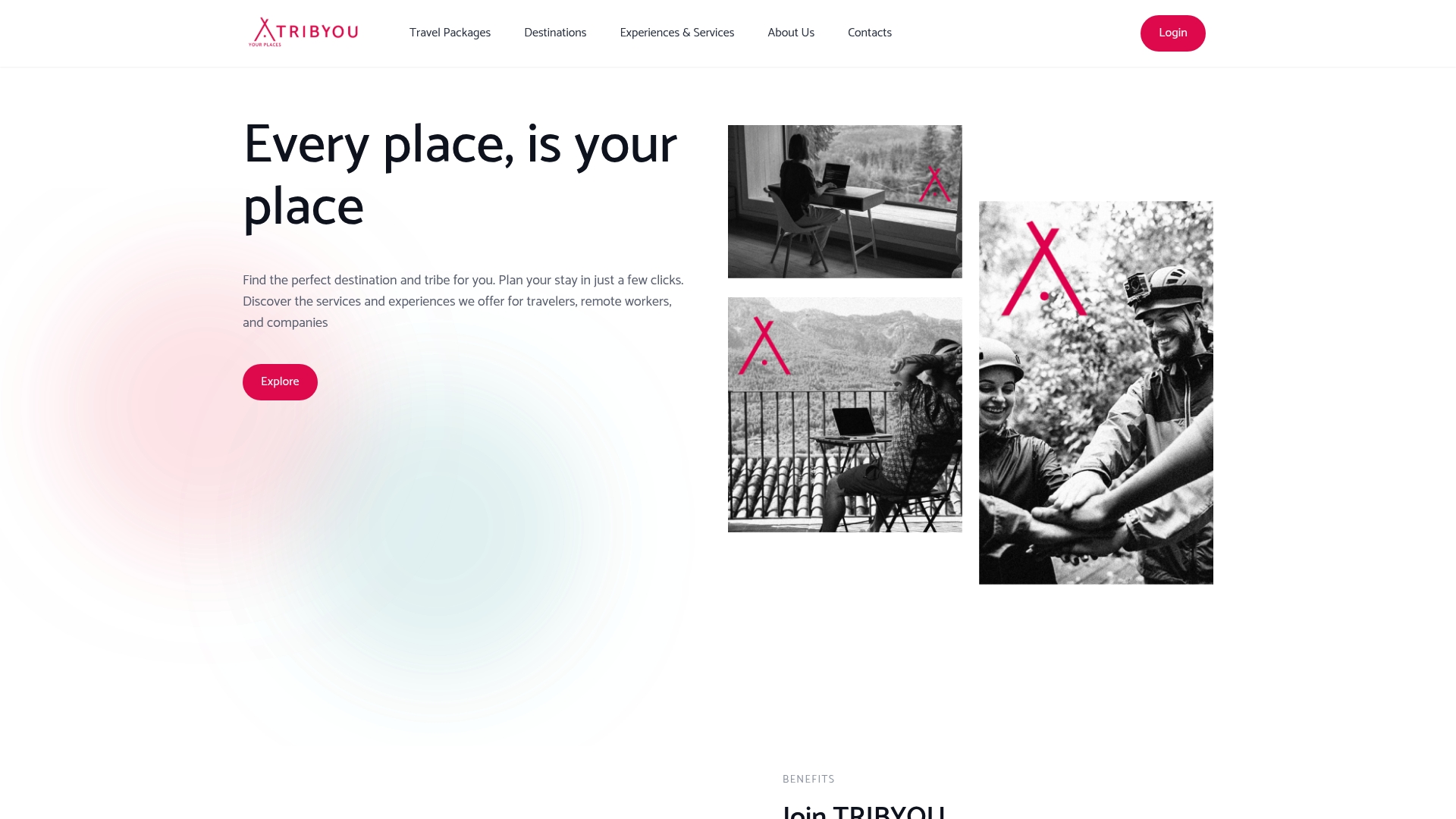
TribYou - Your Places curates accommodations, experiences, and itineraries that align with corporate travel policies from the start. Every booking is structured to support clear expense categorization, with lodging, meals, and activities separated at the point of confirmation. Finance teams get cleaner data. Travelers get a better experience. Compliance does not require extra work after the fact. Visit TribYou - Your Places to see how a purpose-built corporate travel ecosystem simplifies your entire program, from booking to reimbursement.
FAQ
What are the standard corporate travel expense categories?
The standard categories are Transportation, Lodging, Meals, Incidentals, Communication, and Conference fees. Each category maps to specific IRS documentation requirements and deductibility rules.
How many GL codes should a company use for travel expenses?
Finance experts recommend 6–10 core GL codes for travel and entertainment expenses. Fewer codes reduce misclassification and prevent employees from defaulting to an "Other" category.
What does the IRS require to substantiate a travel expense?
The IRS requires five data points for every expense: amount, date, place, business purpose, and the business relationship of any other parties involved. Receipts over $75 must be itemized.
What happens if a company misses the IRS accountable plan deadlines?
Reimbursements become taxable wages if employees do not submit documentation within 60 days or return excess advances within 120 days. The company must then report these amounts on the employee's W-2.
Are meal expenses fully deductible during business travel?
Meal expenses during business travel are generally 50% deductible. The IRS requires documentation of the amount, date, location, attendees, and the business purpose of the meal.