

Budget long-term travel for remote workers is defined as living and working abroad for three months or more while keeping total monthly costs below what you would spend at home, without sacrificing internet reliability, work output, or personal wellbeing. The term "digital nomad" is the recognized industry label for this lifestyle, and in 2026 it describes a workforce that spans every time zone and income bracket. Destinations like Chiang Mai, Da Nang, Tbilisi, and Lisbon have built entire ecosystems around this demand. The difference between those who thrive and those who burn out comes down to three decisions: where you go, how you manage money, and how you protect your work routine.
Which affordable destinations offer the best balance of cost and infrastructure?
The most cost-effective remote work destinations in 2026 share three traits: low cost of living, fast internet, and a legal pathway for long stays. Low-cost hubs like Chiang Mai in Thailand, Da Nang in Vietnam, and Tbilisi in Georgia let you cover rent, food, coworking, and transport for $750–$1,200 per month. That figure is not a backpacker budget. It includes a private apartment, daily restaurant meals, and a coworking desk.
Mid-range European destinations cost more but offer stronger legal frameworks and cultural proximity for workers serving North American or European clients. Portugal's Algarve and Lisbon run $1,500–$3,000 per month. Spain's Valencia and Málaga sit in a similar range. Both countries offer dedicated digital nomad visas. Over 65 countries now offer dedicated nomad visas with stays ranging from 6–24 months and varying income thresholds. That expansion means legal long-term residency is no longer reserved for a handful of locations.

What to look for beyond price
Cost alone does not determine a destination's value. Coworking infrastructure and an active nomad community matter as much as monthly rent for long-term productivity and social health. A city with $600 apartments but unreliable power and no coworking scene will cost you clients. Prioritize destinations where coworking spaces are plentiful, internet speeds are consistent above 50 Mbps, and the nomad community is large enough to provide professional and social support.
| Destination | Monthly budget | Visa option | Internet reliability | Nomad community |
|---|---|---|---|---|
| Chiang Mai, Thailand | $750–$1,000 | Tourist + LTR visa | Strong | Very large |
| Da Nang, Vietnam | $800–$1,200 | E-visa (90 days) | Strong | Large |
| Tbilisi, Georgia | $700–$1,100 | Visa-free (365 days) | Good | Growing |
| Lisbon, Portugal | $1,800–$2,800 | Digital nomad visa | Excellent | Very large |
| Málaga, Spain | $1,500–$2,500 | Digital nomad visa | Excellent | Large |
Pro Tip: Before committing to a destination, spend one week in a short-term rental testing the local coworking scene and running internet speed checks at your prospective apartment during peak hours (9:00 AM–11:00 AM local time).
How do remote workers budget and manage finances for long-term travel?
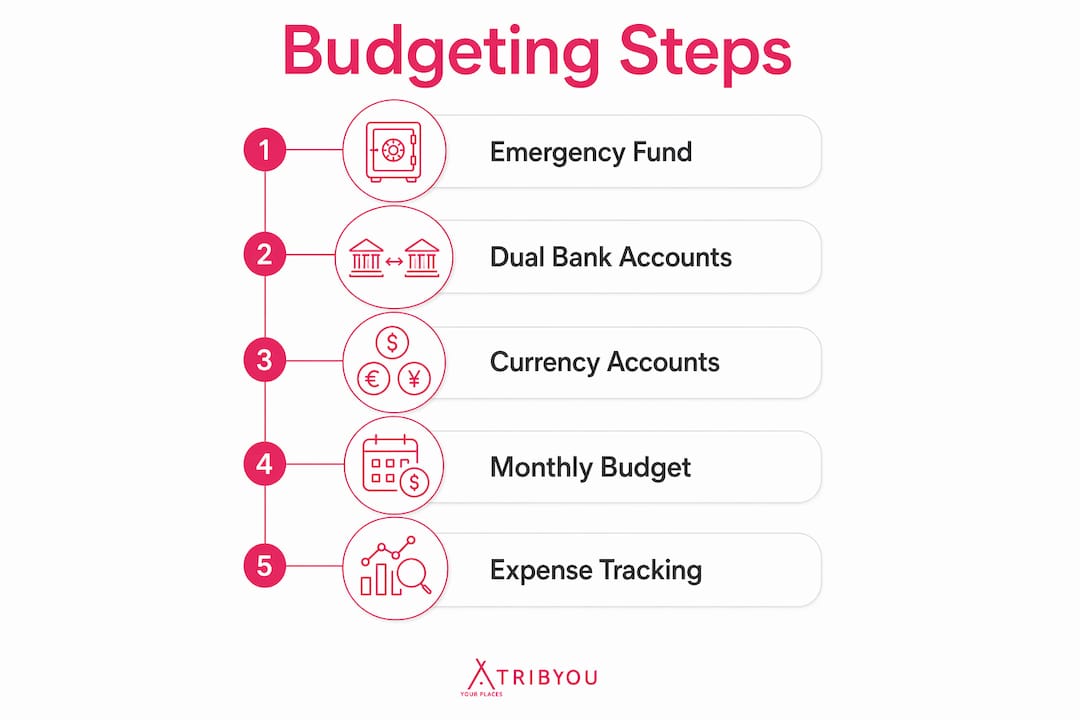
Financial planning for affordable remote work travel goes well beyond finding cheap rent. Comprehensive financial planning must include upfront costs for visas, taxes, banking setup, and insurance, not just monthly living expenses. Remote workers who skip this step often face unexpected costs that force them home early.
A realistic monthly budget for a mid-range destination breaks down like this:
- Accommodation: $500–$1,000 (long-term rental, private room or studio)
- Food: $200–$400 (mix of local restaurants and self-catering)
- Coworking: $80–$200 (day pass or monthly membership)
- Transport: $50–$150 (local transit, occasional ride-shares)
- Health insurance: $45–$75 (nomad-specific plan)
- Miscellaneous: $100–$200 (SIM cards, activities, subscriptions)
Nomad-specific health insurance starts at $45–$75 per month and covers long-term medical care and emergency evacuation. Standard travel insurance does not cover chronic conditions or extended stays. This distinction matters the moment you need a doctor in a country where you have no public health access.
"A recommended emergency fund is 3–6 months of living expenses, roughly $5,000–$10,000, held separately from your monthly budget. This fund prevents a single bad month from ending your entire travel plan."
Financial redundancy is a non-negotiable practice. Experienced remote workers carry two independent bank accounts, two debit cards from different networks, and at least one credit card with no foreign transaction fees. A single card getting blocked abroad is a common and easily preventable crisis.
Pro Tip: Open a Wise or Charles Schwab account before you leave. Both offer fee-free international withdrawals and real exchange rates, which saves meaningful money over months of travel.
What strategies help maintain productivity during long-term travel?
Productivity during long-term travel depends on routine, not willpower. Time-blocked schedules reduce burnout and maintain output during travel far more reliably than flexible, location-dependent work habits. The remote workers who sustain long careers abroad treat their daily schedule as fixed, even when the city around them changes.
Time zone selection is the single most consequential productivity decision you make. Staying within ±6 hours of your main client's time zone preserves real-time overlap for calls, reviews, and urgent requests. Beyond that threshold, asynchronous work becomes the default, which strains client relationships and limits career growth.
Location stability reinforces everything else. Staying 1–3 months in one place stabilizes sleep cycles, local routines, and work output compared to shorter stays. Productivity drops sharply for stays under three weeks because your brain is still adjusting. Frequent moves are the fastest path to burnout.
Travel days require their own rule. Long-haul travel days crossing three or more time zones should be treated as full recovery days, not work days. Jet lag and travel fatigue cause missed deadlines and poor-quality output. Block these days in your calendar and communicate them to clients in advance.
Pro Tip: Set two "anchor blocks" in your daily calendar: one for deep, focused work and one for client communication. Keep these blocks at the same local time regardless of which city you are in. Consistency in your schedule is what clients and your own productivity depend on.
For a deeper look at how remote work travel is structured for real output, the principles of time blocking and location stability apply across every destination and work type.
How do you find and book affordable, work-friendly long-term lodging?
Long-term rentals cost significantly less per night than hotels and provide the kitchen, workspace, and stability that remote work requires. A one-month rental negotiated directly with a host typically runs 30–50% less than the same property booked week by week. The savings compound quickly over a three-month stay.
The features that matter most for working abroad on a budget are not always listed prominently. Use this checklist when vetting any property:
- Internet speed: Ask for a speed test screenshot taken during business hours. Minimum 25 Mbps download; 50 Mbps preferred.
- Dedicated workspace: A desk and chair separate from the bed. Working from a couch destroys posture and focus within weeks.
- Backup power: In Southeast Asia and parts of Eastern Europe, power cuts are common. Ask about backup generators or UPS systems.
- Contract flexibility: Confirm you can leave with 30 days' notice if your plans change.
- Community spaces: Coliving properties with shared kitchens and lounges reduce isolation and create professional connections.
Understanding what lodging features matter most to working guests, including reliable Wi-Fi, quiet workspaces, and flexible check-in, helps you ask the right questions before you book.
For remote workers who want curated options rather than open-market searching, resources covering coliving alternatives and specialized marketplaces provide vetted properties with verified internet speeds and work-friendly amenities.
Pro Tip: Always negotiate a discount for stays longer than 30 days. Most hosts and property managers will reduce the monthly rate by 15–25% for a confirmed three-month booking. Ask directly. The worst answer is no.
Key Takeaways
Sustainable budget long-term travel for remote workers requires choosing destinations with proven infrastructure, building a financial foundation before departure, and protecting your work routine with consistent scheduling and time zone discipline.
| Point | Details |
|---|---|
| Choose destinations strategically | Low-cost hubs like Chiang Mai and Da Nang offer full coverage for $750–$1,200 per month with strong coworking infrastructure. |
| Build a real financial foundation | Hold a $5,000–$10,000 emergency fund separately and carry nomad health insurance from $45–$75 per month. |
| Protect your time zone alignment | Stay within ±6 hours of your main client's time zone to preserve real-time communication and career sustainability. |
| Commit to location stability | Stays of 1–3 months per location stabilize routines and prevent the productivity loss that comes with constant moves. |
| Negotiate long-term lodging rates | Direct negotiation for 30-plus-day stays typically yields 15–25% savings over short-term booking rates. |
What I've learned about sustainable budget travel that most guides won't tell you
The biggest mistake I see remote workers make is optimizing for the lowest possible cost instead of the best possible foundation. They find a $400-per-month apartment in a city with spotty internet, no coworking community, and no legal visa pathway, and they call it a win. Six months later, they are back home, burned out, and behind on client work.
The remote workers who sustain this lifestyle for years share one habit: they treat their work routine as the one constant in a life of variables. The city changes. The apartment changes. The food changes. The schedule does not. That discipline is what keeps clients happy and income stable.
I also think the visa conversation is underrated. Digital nomad visas in 2026 provide 6–24 month stays with work authorization and, in some cases, tax advantages. Working legally in a country is not just about avoiding fines. It gives you access to local banking, longer rental contracts, and peace of mind that lets you focus on work instead of worrying about overstaying.
The workation model is also worth serious consideration for remote workers who want structure without sacrificing flexibility. Curated workation programs handle the infrastructure, community, and logistics so you can focus entirely on your work and your experience of the place.
My honest advice: spend more time planning the first three months than you think you need to. Get the banking right. Get the insurance right. Pick a destination with a real nomad community. Then commit to staying long enough to actually settle in. The budget part becomes easy once the foundation is solid.
— Luca
TribYou - Your Places: curated stays for remote workers who value both work and place
Remote workers who want affordable, work-ready accommodations without the guesswork of open-market searching have a direct path through TribYou - Your Places.
TribYou - Your Places curates accommodations and workation experiences designed specifically for remote workers and long-term travelers. Every property in the TribYou - Your Places network is vetted for reliable internet, dedicated workspaces, and community spaces that reduce isolation. Flexible booking options support stays from one month to several, giving you real control over your budget and your schedule. Whether you are looking for a focused solo workation or a coliving experience with a professional community, TribYou - Your Places connects you with places that work as hard as you do. Find your next stay and make your next destination more than just a location.
FAQ
What is a realistic monthly budget for a budget-friendly digital nomad?
Remote workers in low-cost destinations like Chiang Mai or Da Nang can cover all expenses for $750–$1,200 per month, including accommodation, food, coworking, and transport. Mid-range European destinations like Lisbon or Málaga typically run $1,500–$3,000 per month.
How much should I save before starting long-term travel as a remote worker?
A recommended emergency fund is $5,000–$10,000, held separately from your monthly budget, covering 3–6 months of living expenses. This fund protects you from unexpected costs without forcing you to cut your travel short.
Do I need special health insurance for working abroad on a budget?
Standard travel insurance does not cover long-term stays or chronic conditions. Nomad-specific health insurance plans start at $45–$75 per month and include long-term medical care and emergency evacuation coverage.
How long should I stay in each destination to maintain productivity?
Staying 1–3 months per location stabilizes sleep cycles, local routines, and work output. Stays under three weeks consistently produce productivity dips because the adjustment period consumes too much mental energy.
Which countries offer the best visa options for long-term remote workers?
Over 65 countries now offer dedicated digital nomad visas with stays of 6–24 months and work authorization. Portugal, Georgia, Spain, and Thailand are among the most accessible options in 2026, each with different income requirements and tax structures.