
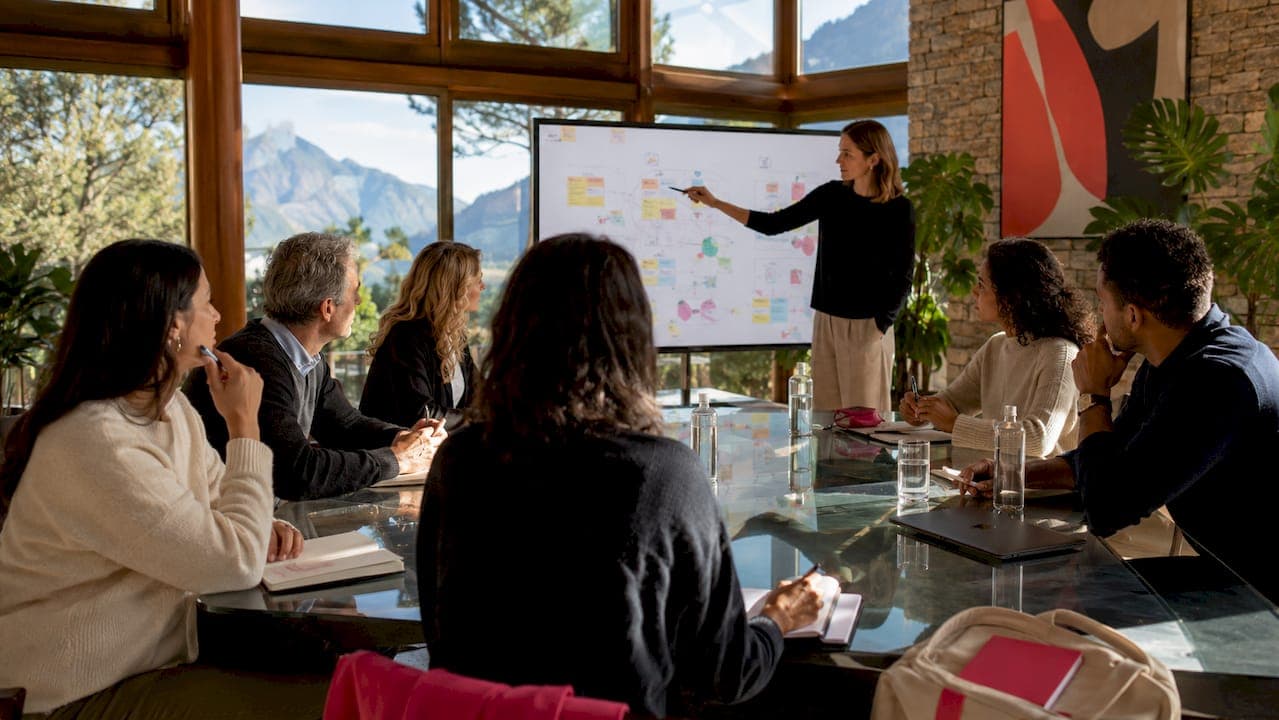
Leadership development retreat exercises are structured activities designed to accelerate strategic alignment, build trust, and produce measurable behavior change in leadership teams. The best programs treat retreats as strategic interventions, not social events. Formats like the "key-shop" model recommended by David Burkus, and comprehensive journeys like the Executive Leadership Council's LDE program, prove that the right exercises, sequenced correctly, produce results that outlast the retreat itself. HR leaders and organizational development professionals who understand this distinction build retreats that change how their organizations actually operate.
1. What are the top leadership development retreat exercises for strategic alignment?
The most effective leadership development retreat exercises connect directly to real organizational challenges. Senior leaders reject generic "corporate camp" games because they fail to respect leadership intelligence or produce genuine business insight. The exercises below are built for depth, not entertainment.
Structured vulnerability exercises are the fastest trust accelerators available to a leadership team. Role biography sharing asks each leader to present their career path, key decisions, and formative failures in a timed format. Pre-mortem scenarios ask the group to imagine a major initiative has failed and work backward to identify what went wrong. Both exercises surface hidden misalignment and expose underground tensions that block strategic execution.

Strategic problem-solving simulations apply a live organizational challenge to small groups of four to six leaders. Each group diagnoses the problem, proposes a solution, and presents to the full team. The exercise forces cross-functional perspective-taking and reveals where leaders hold conflicting assumptions about priorities.
Trust circles pair leaders who rarely collaborate and give them a structured conversation protocol. Each person answers three questions about their leadership style, their biggest current challenge, and one thing they need from the team. The format builds psychological safety faster than unstructured social time.
Pro Tip: Run structured vulnerability exercises after at least one analytically oriented activity. Activity sequencing matters. Leaders who start with data-driven work feel safer moving into interpersonal territory.
Pro Tip: Avoid icebreakers that ask leaders to share fun facts. They signal low expectations. Replace them with a two-minute "leadership origin story" prompt that sets a serious, reflective tone from the first minute.
2. How to design a retreat agenda that balances plenary and application time
Agenda design is the single most underestimated variable in retreat planning. Most HR leaders over-program the schedule and under-invest in application time. The result is a group that absorbs information but never practices using it.
The key-shop format developed by David Burkus recommends 90–120 minute sessions that split 40% plenary content with 60% small-group application. That ratio is not arbitrary. Leaders retain concepts when they immediately apply them to real problems in small groups. A keynote alone produces temporary insight. A keynote followed by a structured small-group exercise produces a decision or a commitment.
A well-sequenced one-day agenda looks like this:
- Opening plenary (60 minutes): Vision alignment, strategic context, and one analytically oriented exercise to warm up the group.
- Small-group application block (90 minutes): Three to four groups tackle a real organizational challenge using the morning's framework.
- White space (30 minutes): Unstructured time for informal conversation. Do not fill this slot.
- Structured vulnerability session (75 minutes): Role biography sharing or pre-mortem exercise with full-group debrief.
- Commitment workshop (60 minutes): Each leader writes two to three behavioral commitments tied to the day's themes.
- Closing plenary (30 minutes): Commitments shared publicly, accountability partners assigned.
Over-programming retreats reduces transformational insight. The white space in step three is not a break. It is where leaders process what they heard and begin connecting it to their own context. Cutting it to add another session is the most common planning mistake.
Pro Tip: Schedule the deepest vulnerability exercise after lunch, not at the end of the day. Energy and openness peak in the early afternoon. End-of-day slots produce rushed conversations and shallow commitments.
3. Traditional vs. modern leadership retreat exercises: which approach works?
The gap between traditional and modern retreat exercises is not about novelty. It is about depth of impact and how long that impact lasts.
| Attribute | Traditional exercises | Modern exercises |
|---|---|---|
| Format | Trust falls, role-playing, generic team games | Psychometric assessments, structured vulnerability, real-world simulations |
| Duration | 30–60 minutes | 75–120 minutes |
| Strategic focus | Low | High |
| Group size | Any | 4–8 per group for application sessions |
| Depth of trust built | Surface level | Psychological safety and authentic disclosure |
| Impact duration | Fades within weeks | Sustained with follow-up coaching |
| Cost indicator | Low | Moderate to high |
Traditional exercises like trust falls work for newly formed teams at junior levels. They fail with senior leaders because they do not engage the analytical and strategic thinking that defines how those leaders operate. A VP who spends their day managing P&L and organizational risk will not trust a colleague more because they caught them falling backward.
Modern approaches, including psychometric tools like the Hogan Assessment or the Leadership Circle Profile, give leaders a shared vocabulary for discussing behavior. That vocabulary makes the structured vulnerability exercises far more productive. Leaders can name patterns instead of dancing around them.
Programs like IMD's Leading for High Impact demonstrate that only programs combining psychometric assessment, small-group coaching, and structured reflection produce lasting change. The retreat is the catalyst. The follow-up is what makes it stick.
4. Outdoor leadership exercises: when environment changes the outcome
The physical environment of a retreat shapes what conversations are possible. Outdoor leadership exercises work not because nature is inherently therapeutic, but because removing leaders from their normal context removes their normal defenses.
Outdoor problem-solving challenges, such as navigation exercises or collaborative construction tasks, work best when they are debriefed with explicit connections to organizational behavior. A group that struggled to agree on a route during a hiking challenge has just demonstrated their actual decision-making dynamic. A skilled facilitator names that dynamic and connects it to a real business situation. Without that debrief, the exercise is just a walk.
Boutique hotel settings and off-site venues in natural environments also reduce status signaling. Leaders who share a meal in a farmhouse or walk through a vineyard together interact differently than they do in a conference room. The informal setting accelerates the trust-building that structured exercises then formalize.
Pro Tip: Pair every outdoor activity with a 20-minute structured debrief using three questions: What happened? What does it mean for how we work? What will we do differently? Without this structure, outdoor exercises produce good memories but no behavioral change.
5. What post-retreat steps actually sustain leadership development impact?
The retreat produces insight. The 90 days after the retreat determine whether that insight becomes behavior. Most retreats fail not because the exercises were weak, but because the follow-up was absent.
The 48-hour rule is non-negotiable: behavioral commitments made during the retreat must be summarized and circulated to all participants within 48 hours. After 48 hours, the emotional context that produced those commitments fades and the commitments lose their weight.
Specific follow-up actions that produce measurable results:
- 90-day check-in: Schedule a mandatory group session 90 days after the retreat. Each leader reports on their two to three commitments. Public accountability is the mechanism that drives follow-through.
- Retreat language in regular meetings: Introduce a standing agenda item in monthly leadership meetings that references commitments made at the retreat. This keeps the retreat alive as a reference point, not a memory.
- Small-group coaching: Assign leaders to coaching triads of three people who meet monthly for 45 minutes. The Executive Leadership Council's LDE program, which costs $7,500 per participant for a 25-hour commitment, uses this structure to sustain development between in-person sessions.
- Psychometric data integration: Share individual assessment results in post-retreat coaching sessions. Leaders who understand their own behavioral patterns can set more specific and realistic commitments.
- Sponsor visibility: Have the CEO or CHRO reference retreat commitments in all-hands communications. Organizational signals from the top reinforce that the retreat was a real strategic event, not a team outing.
The ELC's 25-hour model combining pre-work, intensive in-person sessions, and virtual follow-ups is the clearest evidence that leadership development requires multimodal commitment. A single retreat without follow-up is an expense. A retreat embedded in a longer program is an investment.
Key takeaways
The most effective leadership development retreat exercises combine structured vulnerability, real-world application, and disciplined follow-up to produce lasting behavior change.
| Point | Details |
|---|---|
| Prioritize depth over novelty | Structured vulnerability and real-world simulations outperform generic team games for senior leaders. |
| Use the 40/60 agenda ratio | Dedicate 60% of retreat time to small-group application, not plenary content delivery. |
| Sequence exercises deliberately | Start analytically, then move to interpersonal trust-building to reduce resistance and build engagement. |
| Follow up within 48 hours | Circulate behavioral commitments immediately after the retreat to preserve accountability. |
| Embed retreats in longer programs | A standalone retreat produces temporary insight. A 25-hour multimodal program produces lasting change. |
Why most leadership retreats miss the point
I have worked with enough leadership teams to recognize the pattern immediately. The HR leader books a beautiful venue, hires a keynote speaker, and fills every hour of the agenda. The group leaves energized. Three weeks later, nothing has changed.
The problem is not the exercises. The problem is that the retreat was designed to feel productive rather than to be productive. Retreats treated as strategic interventions produce different outcomes than retreats treated as rewards or team-bonding events. The distinction starts with the design brief, not the venue.
The exercises I trust most are the ones that make leaders slightly uncomfortable. Role biography sharing, pre-mortem scenarios, and structured peer feedback all require leaders to be honest in front of their peers. That honesty is the mechanism. The exercise is just the container. When you remove the discomfort to make the room feel safe, you also remove the growth.
My strongest recommendation is this: hire a facilitator who will push back on the group, not one who will keep everyone comfortable. Psychological safety does not mean the absence of challenge. It means leaders trust each other enough to be challenged. Build that trust with the right exercises, then use it.
— Luca
How TribYou - Your Places supports leadership retreat planning
Planning a retreat that delivers real results requires more than a great venue. It requires the right environment, the right structure, and local experiences that reinforce the work happening in the room.
TribYou - Your Places curates leadership retreat experiences that combine structured development programs with authentic local immersion. Whether your team needs a focused offsite in the Italian countryside or a multi-day executive program with cultural experiences built in, TribYou - Your Places connects you with vetted venues, local partners, and retreat frameworks designed for organizational impact. The platform handles logistics so your team can focus entirely on the work. For HR leaders who want retreats that increase performance and not just satisfaction scores, TribYou - Your Places is the place to start.
FAQ
What are leadership development retreat exercises?
Leadership development retreat exercises are structured activities run during offsite programs to build trust, strategic alignment, and leadership skills. They range from psychometric assessments and structured vulnerability sessions to real-world problem-solving simulations.
How long should a leadership retreat session last?
Sessions of 90–120 minutes work best, combining 40% plenary content with 60% small-group application time. This ratio, recommended by David Burkus, produces deeper retention and real commitments.
What is the most effective post-retreat follow-up action?
Circulating behavioral commitments within 48 hours and scheduling a mandatory 90-day check-in are the two highest-impact follow-up steps. Both actions are critical for converting retreat insight into sustained behavior change.
How do modern retreat exercises differ from traditional ones?
Modern exercises like psychometric assessments, structured vulnerability sessions, and real-world simulations produce lasting change. Traditional exercises like trust falls build surface-level rapport but rarely affect how senior leaders make decisions or collaborate.
How much does a comprehensive leadership development program cost?
Programs like the Executive Leadership Council's LDE, which combines pre-work, in-person retreats, and virtual follow-ups across 25 hours of total commitment, cost approximately $7,500 per participant.