

An executive incentive retreat abroad is defined as a structured, reward-based corporate travel program designed to recognize high performers, strengthen leadership cohesion, and advance measurable business objectives through immersive international experiences. When you plan executive incentive retreat abroad programs correctly, the results go well beyond a memorable trip. Corporate incentive trips flatten organizational hierarchies and enable organic leadership relationship building that formal settings rarely produce. The industry term for this discipline is incentive travel, a subset of MICE (Meetings, Incentives, Conferences, and Exhibitions) travel, and it demands the same rigor as any major corporate initiative.
What prerequisites are essential before planning an executive incentive retreat abroad?
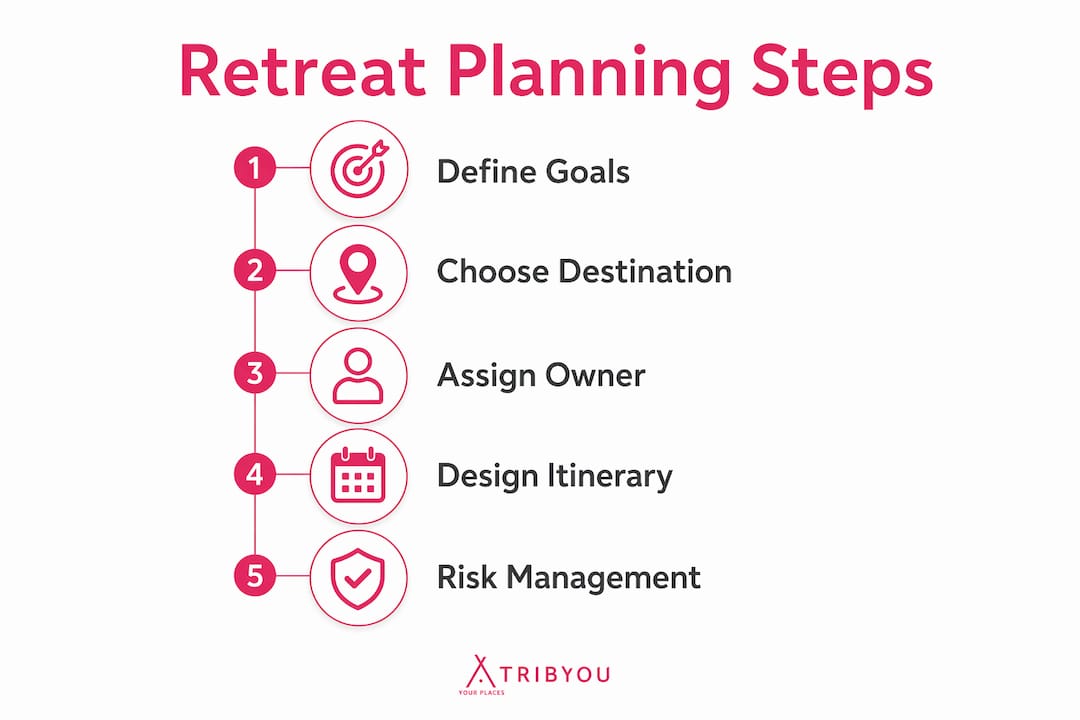
Every successful international executive retreat starts with a documented strategic foundation, not a destination wish list. Before a single flight is booked, your organization needs clarity on three things: what the retreat must achieve, who qualifies to attend, and what the program can realistically spend.

Define corporate goals and qualification criteria first. Your retreat objectives should map directly to KPIs your leadership team already tracks. Examples include accelerating Q3 pipeline closure rates, rewarding the top 15% of regional sales leaders, or reinforcing a post-merger culture integration. Vague goals produce vague programs. Tie the retreat to a measurable outcome and communicate the qualification criteria to participants at least 90 days in advance so the incentive actually drives behavior.
Destination selection is a strategic decision, not a preference poll. Safety ranks highest for corporate planners in 2026, followed by direct air access and the availability of unique, premium experiences. Destinations like the Amalfi Coast, the Algarve in Portugal, Tuscany, and the Azores consistently score well on all three criteria. Emerging markets in Southeast Asia and Latin America offer extraordinary experiences but require more rigorous risk planning.
Conduct a formal risk assessment before committing to any destination. The ISO 31030:2021 framework provides a defensible travel risk management structure built on four pillars: governance, pre-trip risk assessment, real-time monitoring, and post-incident review. Cross-reference your destination against the U.S. Department of State travel advisory tiers and your organization's own risk appetite.
Here is a practical prerequisites checklist:
- Documented retreat objectives tied to specific KPIs
- Participant qualification criteria published in advance
- Destination shortlist scored against safety, air access, and experience quality
- ISO 31030-aligned risk assessment for each shortlisted destination
- Executive and board sign-off with a defined budget envelope
- Named program owner with authority to make binding decisions
- Written travel policy covering insurance, medical evacuation, and emergency contacts
Pro Tip: Assign a single accountable program owner before any vendor conversations begin. Split accountability between HR and operations is the most common reason executive retreats fail at the execution stage.
How to design and execute the retreat itinerary for maximum engagement
A well-designed itinerary for a luxury corporate retreat abroad balances three elements: business substance, authentic local experience, and personal recovery time. Most planners over-schedule. The retreats that generate the strongest post-trip feedback are those that give executives unstructured time to connect organically.
Structuring the program day by day
A four-night international retreat typically works best with this rhythm: arrival and welcome dinner on day one, a full business session on day two, an immersive cultural or adventure experience on day three, and a leadership workshop followed by a closing gala on day four. This structure respects the cognitive load of senior leaders while delivering both business and experiential value.
Authentic local experiences are not optional extras. They are the core of what makes incentive travel distinct from a standard offsite. Think private vineyard tours in Barolo, a guided culinary workshop in a Sicilian masseria, or a sunrise hike to a volcanic crater in the Azores. These moments create shared memories that outlast any PowerPoint presentation. For real-world itinerary ideas, the range of formats available to corporate planners is broader than most HR teams realize.
Wellness and sustainability are now baseline expectations, not differentiators. Incorporating morning yoga, spa access, or a digital detox afternoon signals that your organization values the whole person, not just the performer. Wellness elements that are genuinely integrated into the program, rather than bolted on, consistently improve participant satisfaction scores.
| Itinerary style | Best for | Key benefit |
|---|---|---|
| Adventure-focused | Sales teams, high-energy cultures | Builds trust through shared physical challenge |
| Cultural immersion | Leadership cohorts, post-merger teams | Deepens empathy and cross-cultural awareness |
| Wellness and reflection | Burnout-recovery, senior executives | Restores energy and sharpens strategic thinking |
| Hybrid business and leisure | Mixed seniority groups | Balances productivity with reward |
Pro Tip: Use a shared digital platform such as Cvent or Whova for scheduling, real-time communication, and post-trip feedback collection. Technology reduces coordination friction and gives you data for program improvement.
What safety, compliance, and duty of care measures are required for international retreats?
Duty of care is not a checkbox. For international executive retreats, it is a legal and ethical obligation that your organization must document, practice, and be able to defend in an audit or incident review.
The ISO 31030 framework is the global standard for corporate travel risk management. Its four pillars translate directly into retreat planning: governance means you have a named owner and a written policy; pre-trip assessment means you have evaluated destination-specific risks; real-time monitoring means you have a system to locate and communicate with travelers during the program; and post-incident review means you capture lessons after every trip.
Practical safety measures your program must include:
- Annual written travel policy review with quarterly destination risk updates
- Mandatory pre-trip briefings for all attendees traveling to higher-risk locations
- 24/7 emergency contact line with medical evacuation insurance for every participant
- A pre-departure checklist verifying advisory status, medical requirements, and insurance coverage within 48 hours of departure
- Crisis communication templates with family notification protocols and offline contact methods
For Tier 3 and above destinations, executive protection measures include low-profile transportation arrangements, vetted vehicles, route planning, and digital security protocols consistent with your corporate risk appetite. Hiring local security for specific travel legs is advisable in these contexts.
| Risk tier | Destination examples | Required controls |
|---|---|---|
| Tier 1 (low) | Western Europe, Japan, Australia | Standard travel policy, travel insurance |
| Tier 2 (moderate) | Parts of Southeast Asia, Eastern Europe | Pre-trip briefing, 24/7 emergency line |
| Tier 3 (elevated) | Parts of Latin America, Middle East | Security escort, vetted transport, digital security |
| Tier 4 (high) | Active conflict zones | Executive protection team, real-time monitoring |
Pro Tip: Embedding risk controls directly into your travel booking platform reduces policy violations by 40 to 60 percent within one quarter. This is the single highest-leverage compliance improvement available to most corporate travel programs.
How to manage common challenges when hosting an incentive retreat abroad
Even the best-planned international team building retreat will encounter disruptions. Flight delays, supplier cancellations, currency fluctuations, and participant health issues are not edge cases. They are predictable events that your program must be designed to absorb.
The most common failure points and how to prevent them:
- Travel delays and missed connections: Build buffer time into every transfer. Never schedule a critical business session within four hours of an international arrival.
- Supplier changes: Require contractual substitution clauses with equivalent-quality alternatives for all key vendors, including hotels, transport, and experience providers.
- Cultural misunderstandings: Brief participants on local customs, dress codes, and etiquette before departure. A one-page cultural guide distributed via your retreat app costs nothing and prevents avoidable friction.
- Budget overruns: Reserve 10 to 15 percent of the total program budget as a contingency fund. Document all spend against original estimates in real time.
- Tax compliance: Incentive travel rewards are taxable to recipients based on fair market value under IRS guidance. Work with your tax counsel to determine reporting obligations before the program launches, not after.
A documented escalation ladder is non-negotiable. Integrating a clear escalation process for supplier disruptions ensures that your program owner can make fast decisions without convening a committee at 2 a.m. in a foreign time zone.
Post-trip debriefs are where most organizations leave value on the table. Measuring key program metrics such as traveler reach time during incidents, booking compliance rates, briefing completion, and participant satisfaction scores gives you the data to improve every subsequent program.
Pro Tip: Partner with a specialist operator for your first international executive retreat. Top executive incentive retreat providers bring pre-negotiated supplier relationships, destination expertise, and crisis protocols that take years to build independently.
Key takeaways
Successful executive incentive retreats abroad require documented objectives, ISO 31030-aligned risk management, and itineraries that balance business substance with authentic local experience.
| Point | Details |
|---|---|
| Start with strategy, not destination | Define KPIs and qualification criteria before selecting any location or vendor. |
| Use ISO 31030 as your compliance anchor | This framework covers governance, risk assessment, monitoring, and post-incident review for all international travel. |
| Balance the itinerary deliberately | Combine business sessions, cultural immersion, and recovery time to maximize engagement and retention. |
| Assign a single program owner | One accountable individual with decision-making authority prevents the most common execution failures. |
| Plan for tax and legal obligations | Incentive travel rewards are taxable to recipients; consult tax counsel before the program launches. |
Why authenticity is the metric most planners forget
I have worked with dozens of corporate teams on international retreats, and the pattern is consistent: organizations that obsess over logistics produce technically flawless programs that participants forget within a month. The ones that leave a lasting mark are built around genuine human experiences, moments that could not have happened in a conference room.
The shift toward wellness and sustainability in incentive travel is real, and it reflects something deeper than trend-following. Senior leaders are exhausted. They do not need another gala dinner. They need a morning with no agenda, a meal cooked by a local family, or a conversation with a colleague they have only ever seen on a video call. Those experiences build the kind of trust that actually changes how a leadership team operates when they return.
The metrics matter too. Programs that track participant satisfaction, post-trip performance changes, and retention rates among retreat attendees generate the evidence needed to secure budget for the next program. Without that data, incentive travel remains a discretionary line item that disappears in the first budget cut. With it, you can demonstrate that your executive getaway planning delivers a return that justifies every dollar spent.
My honest advice: do not try to do everything yourself. The best international retreats I have seen were built in partnership with operators who know the destination intimately, who have relationships with local suppliers, and who can solve a problem at midnight without waking the client. That partnership is not a cost. It is the difference between a good trip and a program that defines your company culture for years.
— Luca
Plan your next executive retreat with TribYou - Your Places
TribYou - Your Places designs premium corporate retreats and incentive travel programs that combine authentic local experiences with expert logistics and risk management. Whether you are planning a leadership cohort retreat in Tuscany, a high-performance sales incentive in the Azores, or a corporate offsite abroad, TribYou - Your Places brings destination expertise, vetted supplier networks, and a human-centered approach to every program.
From bespoke itinerary design and wellness integration to ISO 31030-aligned risk protocols and post-trip reporting, TribYou - Your Places handles every detail so your team can focus on what matters. Discover how TribYou - Your Places can turn your next executive retreat into a program your team will talk about for years. Start planning your retreat with a dedicated consultant today.
FAQ
What is an executive incentive retreat abroad?
An executive incentive retreat abroad is a structured corporate travel program that rewards high-performing leaders or teams with an international experience designed to build engagement, reinforce culture, and advance business objectives. It differs from a standard offsite because the travel experience itself is the reward.
How far in advance should you plan an international executive retreat?
Most programs require a minimum of six months of lead time for international destinations, with 9 to 12 months preferred for groups over 20 participants. Longer lead times secure better venue availability, lower rates, and more time for risk assessment and participant preparation.
What safety framework applies to executive retreats abroad?
ISO 31030:2021 is the recognized international standard for corporate travel risk management. It covers governance, pre-trip risk assessment, real-time traveler monitoring, and post-incident review, and it provides a defensible framework for duty of care compliance.
Are incentive travel rewards taxable to participants?
Yes. Incentive travel rewards are taxable to recipients based on fair market value under IRS guidance. Organizations must work with tax counsel to determine reporting and withholding obligations before the program launches.
What are the best locations for executive retreats in 2026?
Safety, direct air access, and unique experience quality are the top selection criteria for corporate planners in 2026. Destinations including Tuscany, the Algarve, the Azores, and select locations in Southeast Asia consistently rank highly across all three criteria for luxury corporate retreats abroad.