

Most HR managers, when they hear "corporate wellness trip," picture one of two things: an overpriced team vacation with a yoga mat thrown in for optics, or a forced group retreat where attendance is mandatory and enthusiasm is not. Neither picture is accurate. A corporate wellness trip is a structured program designed to address the physiological and psychological roots of burnout while simultaneously strengthening team cohesion and business outcomes. This guide breaks down exactly what these programs involve, what the research says about their impact, and how to plan one that your team will actually benefit from.
Table of Contents
- Key takeaways
- What is a corporate wellness trip, really?
- Why the benefits go beyond a nice break
- How to plan a corporate wellness trip that actually works
- Understanding costs and program types
- Corporate retreat ideas that blend wellness and team building
- My take on what actually makes these programs work
- Plan your next corporate wellness trip with TribYou - Your Places
- FAQ
Key takeaways
| Point | Details |
|---|---|
| Not just a vacation | Corporate wellness trips are structured programs targeting burnout and team performance, not leisure travel. |
| Measurable business value | Wellness trips can improve retention, engagement, and creativity in ways that show up in performance data. |
| Design matters more than destination | Poor planning produces "forced fun." Strategic program design produces lasting behavior change. |
| Costs vary widely | Programs range from one-day mindfulness events to multi-day medical-grade retreats with very different ROI profiles. |
| Measurement is non-negotiable | Pre- and post-trip surveys are what separate programs that prove value from ones that get cut from next year's budget. |
What is a corporate wellness trip, really?
A corporate wellness trip is not a category of corporate travel. It is a category of corporate programming that happens to involve travel. The distinction matters because it changes how you plan, budget, and measure success.
At its core, a structured wellness program targets the physiological roots of burnout using activities such as daily yoga, meditation, healthy nutrition, and nature immersion. These elements are not decorative. They are chosen specifically to reset biological rhythms, reduce cortisol levels, and restore cognitive function in employees who have been operating under sustained pressure.
Formats vary considerably. The most common include:
- Short-stay retreats (3 to 4 days) focused on stress reduction and mental reset, typically off-site at a nature or resort setting
- Intensive multi-day experiences (6 to 8 nights) that may include health screenings, personalized nutrition, somatic therapy, and executive coaching
- Hybrid programs that blend wellness activities with business workshops, strategy sessions, or leadership development
- Single-day wellness events that incorporate mindfulness, movement, and nutrition without the overnight travel component
What separates a corporate wellness trip from a standard corporate retreat is intentionality. A team-building bowling night is an event. A program that opens each morning with breathwork, structures collaborative work sessions around peak mental energy windows, and closes each evening with guided reflection is a corporate wellness trip. The programming is deliberate, the sequence is designed, and the outcomes are defined before anyone boards a flight.
Pro Tip: When scoping your program, define whether your primary goal is stress recovery, team cohesion, leadership development, or cultural alignment. Each goal calls for a different program design and activity mix.
Why the benefits go beyond a nice break
The business case for wellness travel for companies is stronger than most finance teams expect. The wellness tourism market is projected to reach $1.4 trillion globally by 2029, with a significant portion of that growth driven by corporate investment in employee health as a measurable business asset.
Here is what the research actually shows about the benefits of wellness trips:
-
Retention uplift. Experiential learning activities used in wellness programs can drive retention rates up to 90%, compared to just 20% for traditional lecture-style training. The difference is neurological: emotional and physical experiences encode differently in memory than passive information.
-
Improved sleep and nutrition habits. Participants in structured wellness retreats report lifestyle changes and greater mental clarity that extend well beyond the trip itself. This is not a temporary effect. Retreats that include nutritional education and sleep hygiene workshops shift long-term behavior.
-
Reduced absenteeism and creative output gains. Retreats that integrate health screenings and anti-inflammatory nutrition show measurable improvements in creativity and reductions in sick days taken in the months following the program.
-
Team cohesion that translates to communication quality. Shared non-work experiences, particularly those involving physical challenge or vulnerability (think breathwork or sunrise hikes), accelerate trust-building between colleagues who rarely interact outside of Slack threads.
-
Budget impact. Companies across finance, legal, and the fashion and automotive sectors have found that adding wellness elements can justify increasing event budgets by 10 to 30% because the human capital ROI is demonstrable.
The most important insight here is one that surprises many HR managers: the tension between wellness and productivity is a false one. Well-rested teams make better strategic decisions. The research is consistent on this point.
How to plan a corporate wellness trip that actually works

Most wellness trips that disappoint do so because they were planned backwards. The destination was chosen first, activities were added to fill time, and the business objectives were an afterthought. Here is how to reverse that process.
Define goals before selecting venues
Your wellness goals and your business goals need to be defined together, not separately. Are you addressing a specific burnout signal you have tracked in your engagement surveys? Are you trying to rebuild connection after a period of remote work? Are you developing a cohort of mid-level leaders? Each of these calls for a different program structure. Venues, facilitators, and activity types follow from that definition.
Build the agenda around human energy, not clock time
The most effective programs replace rigid meeting-heavy schedules with what researchers call "balance-seeking" structures. Morning sessions handle physically activating practices like yoga or outdoor group movement. Late mornings are used for focused collaborative work while mental energy is high. Afternoons include quieter individual reflection or creative workshops. Evenings are restorative and social, not programmed with more business content.
Pro Tip: Leave at least one full unstructured afternoon in any multi-day program. Teams need unscheduled time to have the spontaneous conversations that structured sessions never produce.
Avoid the most common planning mistakes
| Common mistake | What to do instead |
|---|---|
| Treating it as a vacation with work attached | Define clear wellness and business outcomes before planning starts |
| Overloading the agenda | Cut one activity per day. Space creates reflection. |
| Ignoring dietary and physical accessibility needs | Collect detailed health and dietary information before finalization |
| Skipping measurement | Send pre-retreat surveys and follow up at 30, 60, and 90 days post-trip |
| Choosing exotic locations before setting goals | Select the venue based on what the program requires, not what looks good in photos |
Measure before, during, and after
Pre- and post-retreat surveys measuring burnout scores, team trust levels, and individual wellness markers give you data at 30, 60, and 90 days that can directly justify the next program's budget. Without measurement, wellness trips are a cost center. With it, they become a retention and performance investment.
Treat logistics like a client deliverable
Handling retreat logistics with the same professionalism you would apply to a client project, including flights, dietary coordination, transfers, and small surprise elements, significantly improves participant engagement. The experience starts before anyone arrives at the venue. If the logistics are stressful, the wellness program is already behind.
Understanding costs and program types
Cost is the question most HR managers lead with, and the honest answer is that the range is genuinely wide. Corporate wellness trips vary from one-day mindfulness events to 6 to 8 night medical-grade intensive retreats, with group sizes often capped to preserve personalization.
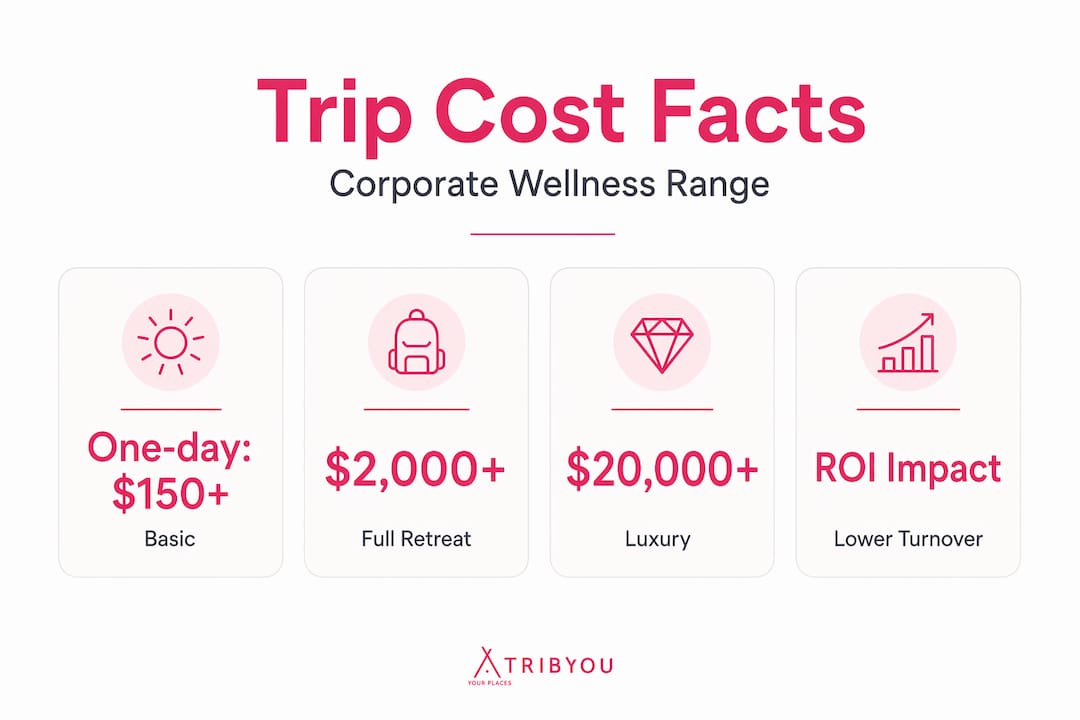
| Program type | Typical duration | Key features | Budget range per person |
|---|---|---|---|
| One-day wellness event | 1 day | Meditation, yoga, nutrition workshop | $150–$500 |
| Short-stay retreat | 3–4 days | Stress reset, team activities, facilitated sessions | $800–$2,500 |
| Intensive wellness retreat | 6–8 nights | Health screenings, nutrition, somatic therapy | $3,000–$8,000+ |
| Luxury executive retreat | 5–7 nights | Medical-grade, executive coaching, high-end setting | $8,000–$20,000+ |
The ROI framing matters here. A $2,000 per-person retreat that measurably reduces turnover by even a few percentage points pays for itself in recruitment and onboarding cost savings alone. Wellness retreat value lies in prevention, education, and personal transformation. That is a different budget conversation than "we want to do something nice for the team."
Corporate retreat ideas that blend wellness and team building
Some of the most effective team building wellness activities work precisely because they do not feel like team building. They feel like genuine personal experiences that happen to be shared. A few formats worth exploring:
- Guided group breathwork sessions. These produce rapid stress reduction and create a shared emotional experience that accelerates team trust faster than any icebreaker.
- Healthy culinary workshops. Teams cook together using local, anti-inflammatory ingredients. The collaboration is natural, the output is shared, and the nutritional education is embedded in the experience.
- Nature immersion walks with facilitated reflection. A guided walk through a forest or coastal landscape, followed by a structured reflection conversation, connects physical restoration with business intention-setting.
- Mindfulness and meditation mornings. Even simple meditation spaces at corporate gatherings significantly boost engagement and participant endurance throughout the day.
- Wellness and business workshops. Sessions that connect personal energy management to professional performance, such as teaching stress regulation techniques within a leadership context, are particularly effective for senior teams.
The best corporate retreat ideas are not the most elaborate ones. They are the ones designed around what your specific team actually needs at this moment in their collective and individual lives.
My take on what actually makes these programs work
I have seen a lot of corporate wellness programs. Some of them change people. Most of them change nothing. The difference is almost never the destination. It is almost always the intention behind the design.
What I have learned working with corporate groups across different contexts is that wellness must be woven into the program architecture, not attached to the outside of it. When a company books a beautiful resort and then schedules wellness activities between dense strategy sessions, the wellness elements become decoration. The team arrives stressed, moves through two hours of meditation, and then sits back down for five more hours of presentations. Nothing resets.
The programs that produce lasting change give restoration as much weight as business content. They trust that a team that has actually slept well, moved their bodies, and had real conversations will produce better strategic thinking than a team that has powered through another grueling agenda in a more scenic location.
I have also noticed that many HR managers underestimate how much the pre-trip and post-trip work matters. The retreat itself is a catalyst. What you do with the momentum before and after is what determines whether any of it sticks. Send a reflection prompt to your team before they arrive. Hold a 30-day check-in after they return. Connect the experience back to the goals you defined at the start. That follow-through is what transforms a nice trip into a program with measurable impact.
My honest view: if you are not willing to measure it, you are not ready to justify the investment. And if you are willing to measure it, you will very likely find the numbers support doing it again.
— Luca
Plan your next corporate wellness trip with TribYou - Your Places
If you are ready to move from planning to action, TribYou - Your Places builds corporate wellness trips that are designed around your team's actual goals, not generic resort packages. From a tropical team retreat in Phuket to an executive wellness experience in Italy, TribYou - Your Places handles every dimension of program design and logistics. That means venue selection, wellness facilitator coordination, dietary management, and the kind of thoughtful details that turn a standard offsite into a program your team will talk about for years. Explore what a tailored corporate health getaway looks like for your organization and connect with a TribYou consultant to build your program.
FAQ
What is a corporate wellness trip?
A corporate wellness trip is a structured, professionally designed program that uses activities like yoga, meditation, nutrition education, and nature immersion to address employee burnout and improve team cohesion. Unlike a standard corporate retreat, the wellness programming is intentionally integrated into the agenda rather than added as an optional bonus.
How much does a corporate wellness trip cost?
Costs range from approximately $150 per person for a one-day wellness event to $20,000 or more per person for a luxury multi-day medical-grade executive retreat. The most common mid-range option, a 3 to 4 day structured retreat, typically runs between $800 and $2,500 per person depending on location and programming.
What activities are included in a corporate wellness trip?
Common activities include daily yoga and meditation, breathwork sessions, healthy culinary workshops, nature immersion walks, health screenings, and workshops that connect personal energy management to professional performance. The specific mix depends on the goals defined for the program.
How do you measure the ROI of a corporate wellness trip?
Use pre-retreat surveys to establish baseline burnout scores and engagement metrics, then follow up at 30, 60, and 90 days post-trip to track changes. Retention rates, absenteeism data, and manager-reported performance changes are the most commonly used ROI indicators.
How is a corporate wellness trip different from a regular team offsite?
A regular offsite prioritizes business content and uses team activities as a social break. A corporate wellness trip treats employee well-being as the primary objective and builds business content around a framework designed to optimize mental and physical performance first.