

When you decide to plan corporate team retreat abroad, you are committing to one of the most powerful investments your company can make in its people. Disengaged employees cost companies $16,000 annually per person, and a well-executed international retreat directly addresses that problem. But getting it right requires more than booking flights and a hotel. It demands strategic goal-setting, realistic budgeting, smart destination choices, and airtight logistics. This guide walks you through every phase, so your retreat delivers real results.
Table of Contents
- Key takeaways
- How to plan a corporate team retreat abroad the right way
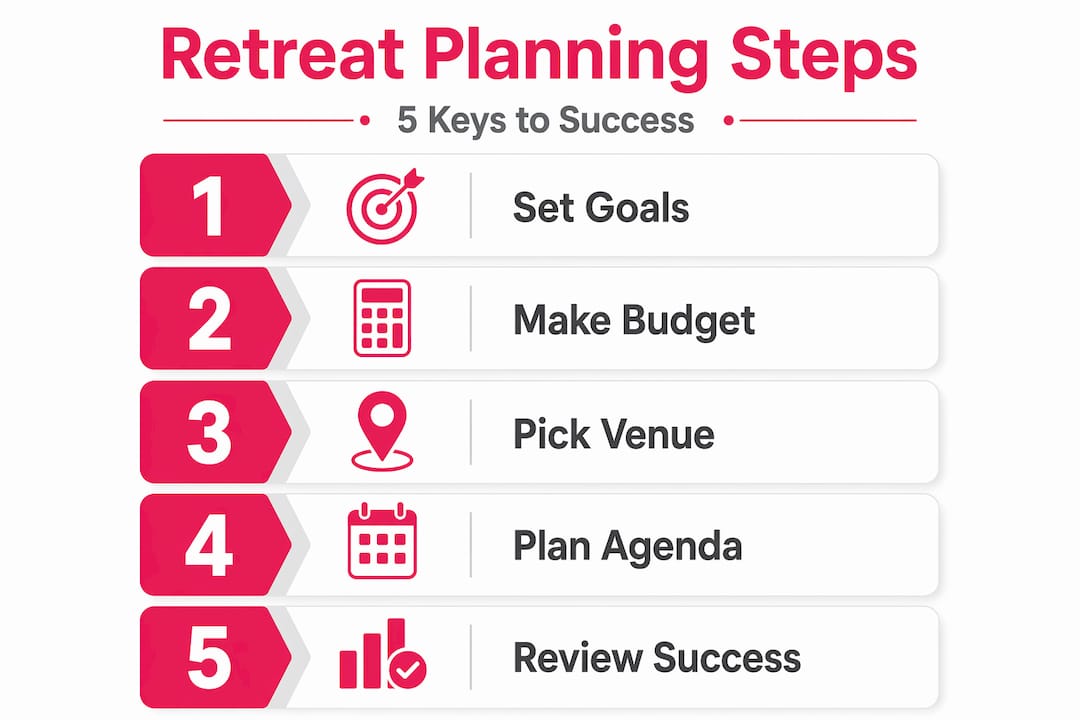
- Setting clear goals for your retreat
- Building a realistic budget
- Choosing the right destination and venue
- Designing an agenda that actually works
- Managing logistics and risk
- Measuring success after the retreat
- What I have learned from planning retreats abroad
- Let Tribyou handle the complexity
- FAQ
Key takeaways
| Point | Details |
|---|---|
| Start with clear goals | Define your retreat purpose before choosing a destination, agenda, or budget. |
| Budget per person first | Build your budget from per-person costs outward, not from a total number downward. |
| Destination drives experience | Accessibility, safety, and cultural fit matter as much as scenery when selecting a location. |
| Balance structure and freedom | Overscheduled agendas reduce engagement. Build in unstructured time deliberately. |
| Measure outcomes afterward | Send a post-retreat survey within one week to capture feedback while it is still fresh. |
How to plan a corporate team retreat abroad the right way
The most common mistake companies make is treating an international retreat like a vacation booking. It is not. Managing cross-border payments, currency risks, and travel compliance adds layers of complexity that require a project management mindset from day one. Think of it as a phased initiative with clear milestones, dependencies, and owners at each stage.
Strategic corporate retreats have shifted toward solving real business challenges, not just team bonding. That shift changes everything about how you plan. When the retreat has a defined business purpose, every decision from the destination to the daily schedule becomes easier to justify and easier to execute.
Setting clear goals for your retreat
Before you look at a single destination or venue, you need to answer one question: what does success look like for your team? The answer shapes every decision that follows.
Popular retreat types include team building, professional development, wellness, creative ideation, remote team meet-ups, and workations. Each type demands a different structure, a different environment, and a different budget. A wellness retreat in the mountains of Portugal looks nothing like a strategic planning offsite in Milan.
Here is how your goals translate into planning decisions:
- Team building focus: Prioritize activities over conference rooms. Choose destinations with outdoor or cultural experiences that create shared memories.
- Professional development: You need quality AV equipment, breakout spaces, and reliable internet. Urban venues with conference infrastructure work best.
- Wellness and recovery: Look for nature settings, spa facilities, and lighter schedules. Southeast Asia and Southern Europe offer strong options at reasonable costs.
- Creative ideation: Novelty matters. An unfamiliar environment stimulates fresh thinking. Unique locations like Lisbon, Bali, or the Amalfi Coast deliver that stimulus naturally.
Pro Tip: Write your retreat goals in one sentence before you start planning. If you cannot summarize the purpose clearly, your team will not feel it during the event either.
Building a realistic budget
Budget planning is where most international retreats run into trouble. Teams either underestimate costs or start with a total number and try to make everything fit inside it. Both approaches create problems.

Effective planners build budgets from per-person costs rather than from overall totals. Start by estimating what each attendee will cost across every category, then multiply by headcount. That gives you an honest number to present to leadership.
Here is a realistic breakdown of cost categories for a 3-day international retreat:
| Cost category | Typical per-person range | Notes |
|---|---|---|
| International flights | $400–$1,200 | Varies by origin and destination |
| Accommodation (3 nights) | $200–$600 | Budget to luxury tiers |
| Meals and catering | $100–$300 | Full board vs. per-meal basis |
| Team-building activities | $80–$250 | Guided experiences, workshops |
| Ground transport | $50–$150 | Airport transfers, day trips |
| Contingency buffer | 10–15% of total | Non-negotiable reserve |
3-day international retreats typically cost between £2,000 and £3,000 per person, with regional variations between €450 and €1,900 depending on destination tier and accommodation standard. Europe tends to sit at the higher end. Southeast Asia and Latin America offer significantly more value per dollar.
One principle that cannot be overstated: cover all employee expenses during the retreat. Asking staff to pay out of pocket for meals, transport, or activities, even temporarily, signals that the company has not fully committed to the experience. It harms cohesion before the retreat even ends.
Pro Tip: Always allocate a 10 to 15 percent contingency in your budget for unexpected disruptions such as flight delays, room changes, or vendor adjustments. This buffer protects the experience without requiring emergency approvals mid-trip.
Choosing the right destination and venue
Your destination is not just a backdrop. It actively shapes how your team feels, how they interact, and what they take home. Choosing well requires matching the location to your goals, not just picking somewhere that looks appealing.
Accessibility, including flight duration, visa requirements, and local transport, significantly affects suitability and attendee experience. A destination that requires three connecting flights and a complex visa process will exhaust your team before the retreat begins.
When shortlisting destinations, evaluate each one against these criteria:
- Flight connectivity: Can most attendees reach the destination with one direct flight or one connection? Anything more complex adds stress and cost.
- Visa requirements: For international teams, check whether attendees from different countries need visas. Some destinations are far simpler to access than others.
- Safety and infrastructure: Reliable internet, quality healthcare access, and stable local services matter for a professional event.
- Cultural fit: The destination's culture should support your retreat type. Japan suits structured, high-respect professional development. Bali suits wellness and creative retreats. Italy suits incentive and culinary experiences.
Here is a quick comparison of popular destination tiers for team building retreats abroad:
| Destination | Best for | Cost tier | Accessibility |
|---|---|---|---|
| Lisbon, Portugal | Creative, team building | Mid | High |
| Phuket, Thailand | Wellness, tropical experiences | Low to mid | Moderate |
| Tuscany, Italy | Incentive, executive retreats | Mid to high | High |
| Medellín, Colombia | Innovation, adventure | Low | Moderate |
| Barcelona, Spain | Mixed, urban team building | Mid | High |
For venue type, match the space to your agenda. Conference hotels work well for development-heavy programs. Luxury villa buyouts create intimacy and exclusivity for smaller leadership teams. Nature retreats with outdoor facilities suit active, wellness-oriented groups.
Designing an agenda that actually works
The biggest agenda mistake is overscheduling. Back-to-back sessions feel productive on paper but drain your team by day two. Balanced retreat agendas avoid overscheduling, incorporate unstructured time, and align activities with team energy cycles to boost engagement and psychological safety.
Here is a proven structure for a 3-day international retreat:
- Day 1: Arrive and connect. Schedule arrival and check-in in the morning. Run a light welcome session in the afternoon. Keep the evening social and informal. This day is about settling in, not delivering content.
- Day 2: Work and experience. Schedule your most demanding sessions in the morning when energy is highest. Run a shared team-building experience in the afternoon. A cooking class, guided hike, or cultural workshop works well. Keep the evening relaxed.
- Day 3: Reflect and commit. Use the morning for strategic discussions or planning sessions. Close with a structured reflection exercise where each person shares one commitment. Allow afternoon departure or free time.
When selecting team-building activities, prioritize experiences that create genuine shared memories over activities that feel like mandatory fun. Cooking together, navigating a new city, or working on a local community project all generate stories your team will still reference months later.
Pro Tip: Schedule your most important work session on day 2, not day 1. People need one evening together before they are ready to engage deeply with business content.
Managing logistics and risk
This is where international retreats either hold together or fall apart. Logistics management for a group traveling abroad is genuinely complex. Treating retreat planning as a phased project with clear milestones helps manage dependencies like deposits, travel compliance, and logistics more effectively.
Key logistics areas to address before departure:
- Group travel coordination: Book all flights and transfers centrally. Do not leave attendees to book their own flights and reimburse later. Fragmented travel creates fragmented arrivals and unnecessary stress.
- Travel insurance: Arrange group travel insurance that covers medical emergencies, cancellations, and lost luggage. Verify coverage applies in your destination country.
- Health and safety protocols: Confirm any vaccination requirements or health advisories for your destination. Brief your team clearly before travel.
- Dietary and accessibility needs: Collect this information at registration, not the week before departure. Venues need advance notice to accommodate restrictions properly.
- International payments: Address currency conversion and cross-border payment logistics early. Using a business account designed for international transactions prevents costly surprises.
"Managing cross-border financial transactions and compliance early in planning prevents costly disruptions and ensures smooth execution abroad."
Send a detailed pre-departure briefing to all attendees at least two weeks before travel. Include the full schedule, packing suggestions, emergency contacts, and a clear policy on expenses. Clarity before the trip eliminates confusion during it.
Measuring success after the retreat
The retreat ends. Your team flies home. What happens next determines whether the investment actually paid off.
Post-retreat surveys with 10 to 15 concise questions sent within one week maximize response rates and provide feedback you can act on. Wait longer and the detail fades.
Structure your survey around four areas:
- Satisfaction: Did the experience meet expectations? What stood out positively?
- Relevance: Did the content and activities connect to real work challenges?
- Relationships: Did attendees feel more connected to colleagues after the retreat?
- Action: What specific changes or commitments came out of the retreat?
Beyond the survey, hold a brief debrief with your planning team within two weeks. Identify what worked, what to improve, and what to lock in for next time. Assign clear owners to any action items that emerged from the retreat itself. Without follow-through, even the best retreat loses its momentum within 30 days.
What I have learned from planning retreats abroad
I have seen companies spend significant budgets on international retreats and walk away with little more than a photo album. I have also seen modest budgets produce transformations that lasted years. The difference almost never comes down to money.
What I have found is that the retreats that fail tend to share one problem: the planners treated the event as a reward rather than a tool. When a retreat is designed purely as a perk, the agenda gets filled with entertainment. When it is designed as a strategic investment, every hour has a purpose.
The other thing I have learned is that emotional safety matters more than most planners realize. Teams do not open up in unfamiliar places just because the setting is beautiful. You need deliberate facilitation, structured moments for vulnerability, and enough unscheduled time for real conversations to happen organically.
My honest advice: if your team is larger than 20 people or you are organizing a retreat overseas for the first time, bring in professional support. Using professional retreat planners can offset their fees with savings from vendor negotiation, reduced errors, and stronger outcomes. The complexity of international logistics alone justifies the investment.
— Luca
Let Tribyou handle the complexity
Planning an international corporate retreat is a significant undertaking. Tribyou exists to make that process manageable, personal, and genuinely rewarding for your team.
Whether you are considering a tropical team retreat in Phuket or an executive incentive experience in Italy, Tribyou connects you with trusted venues, experienced local partners, and a planning support network that covers everything from destination selection to post-retreat logistics. You bring the goals. Tribyou brings the infrastructure, the contacts, and the experience to execute them well. Your team deserves a retreat that works. Explore what Tribyou can build for you.
FAQ
How far in advance should you plan a corporate retreat abroad?
Start planning at least four to six months before your intended travel date. International retreats require time for visa processing, group flight booking, venue deposits, and team communication.
What is a realistic budget for an international team retreat?
Per-person costs for a 3-day international retreat typically range from €450 to over £3,000 depending on destination, accommodation tier, and activities included. Always add a 10 to 15 percent contingency buffer.
How many days should a corporate team retreat last?
Three to four days is the most effective duration for international retreats. It allows enough time for meaningful work sessions and team bonding without exhausting attendees or creating excessive travel costs.
What are the best destinations for team retreats abroad?
Lisbon, Phuket, Tuscany, Barcelona, and Medellín consistently rank among the best destinations for team retreats, offering strong infrastructure, cultural richness, and a range of venue options for different retreat types.
How do you measure the success of a corporate retreat?
Send a post-retreat survey with 10 to 15 focused questions within one week of returning. Track satisfaction, relationship quality, and whether attendees can name specific commitments or changes that resulted from the experience.