
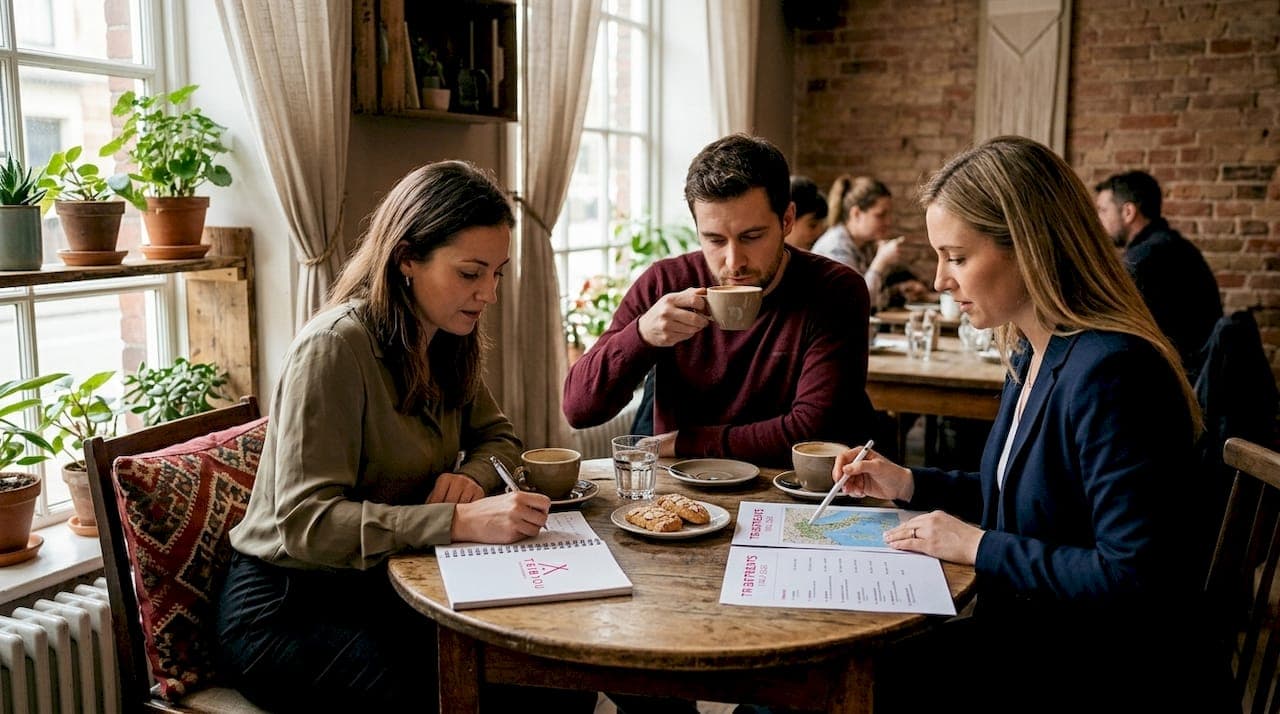
Understanding how group travel strengthens morale goes well beyond booking flights and hotel rooms. Most managers assume that regular team meetings, shared lunches, or after-work events are enough to build real cohesion. They are not. The social bonds that actually drive loyalty, communication, and trust require conditions that most offices simply cannot replicate. Shared travel experiences create those conditions. They put people in unfamiliar situations together, strip away job titles, and generate the kind of mutual reliance that turns colleagues into a genuinely connected team.
Table of Contents
- Key takeaways
- How group travel strengthens morale at a psychological level
- Tangible benefits that carry back to the office
- Planning group travel that actually works
- Comparing the four main types of group travel
- What I have actually learned about making group travel work
- Plan your next team trip with TribYou - Your Places
- FAQ
Key takeaways
| Point | Details |
|---|---|
| Psychology drives the results | Interdependence and emotional safety during travel create durable bonds that outlast the trip itself. |
| Morale links directly to retention | Declining morale is a top workforce threat, making travel investment a strategic retention tool. |
| Design determines impact | Facilitated debriefs connecting experiences to company values turn trips into growth opportunities. |
| Trip type shapes the outcome | Adventure, wellness, volunteer, and incentive travel each produce different morale and engagement results. |
| Purpose matters more than budget | Real, shared challenges and authentic experiences outperform expensive but superficial social events. |
How group travel strengthens morale at a psychological level
The case for group travel is not built on intuition. It is built on how human brains process shared experience.
Research on group adventure shows that interdependence and meaningful tasks during group travel create durable bonds and measurable wellbeing improvements. When your team collectively navigates an unfamiliar city, solves a logistics problem together, or physically supports each other through a challenging activity, the brain registers that experience as meaningful. Not as a meeting. Not as a slide deck. As real life.
Mirror neurons play a direct role in this process. Emotional contagion through mirror neurons amplifies group emotions, which means one person's excitement, relief, or sense of accomplishment spreads physically through the group. This is why a shared summit, a successful group cooking class, or even a delayed flight handled well together can leave a team feeling genuinely closer. The emotion is contagious in the most literal neurological sense.
Psychological safety is the third mechanism, and probably the most important one. Emotional safety enables vulnerability and deeper engagement among participants. In a typical office, people manage their image constantly. On a group trip, the walls come down. You see how someone handles stress, how they treat a local guide, how they respond when things go sideways. That visibility builds trust faster than six months of co-working.
Here is what this looks like in practice for a facilitator:
- Shared challenge: Activities that require the group to depend on each other, not just participate alongside each other, produce stronger bonds.
- Emotional exposure: Situations where people feel something real, relief, pride, even frustration, deepen connections in ways that comfortable activities cannot.
- Role flattening: Travel naturally removes hierarchy. The CEO who cannot read a menu in a foreign language is on equal footing with the intern who speaks the local language.
- Novelty: New environments force everyone to learn simultaneously, which levels the playing field and encourages collaboration.
Pro Tip: Before the trip begins, set a short group intention. Ask each person to name one thing they want to learn about a colleague. It takes five minutes and immediately shifts the group's emotional posture from social obligation to genuine curiosity.
Tangible benefits that carry back to the office
Understanding the psychology is useful. Understanding the business outcomes is what gets budget approved.
Incentive trips strengthen loyalty and morale by offering memorable shared experiences that no bonus check can replicate. And the effects do not stay in the destination. Teams that travel together return with improved communication patterns, clearer interpersonal trust, and a shared reference point they can call back to for months.
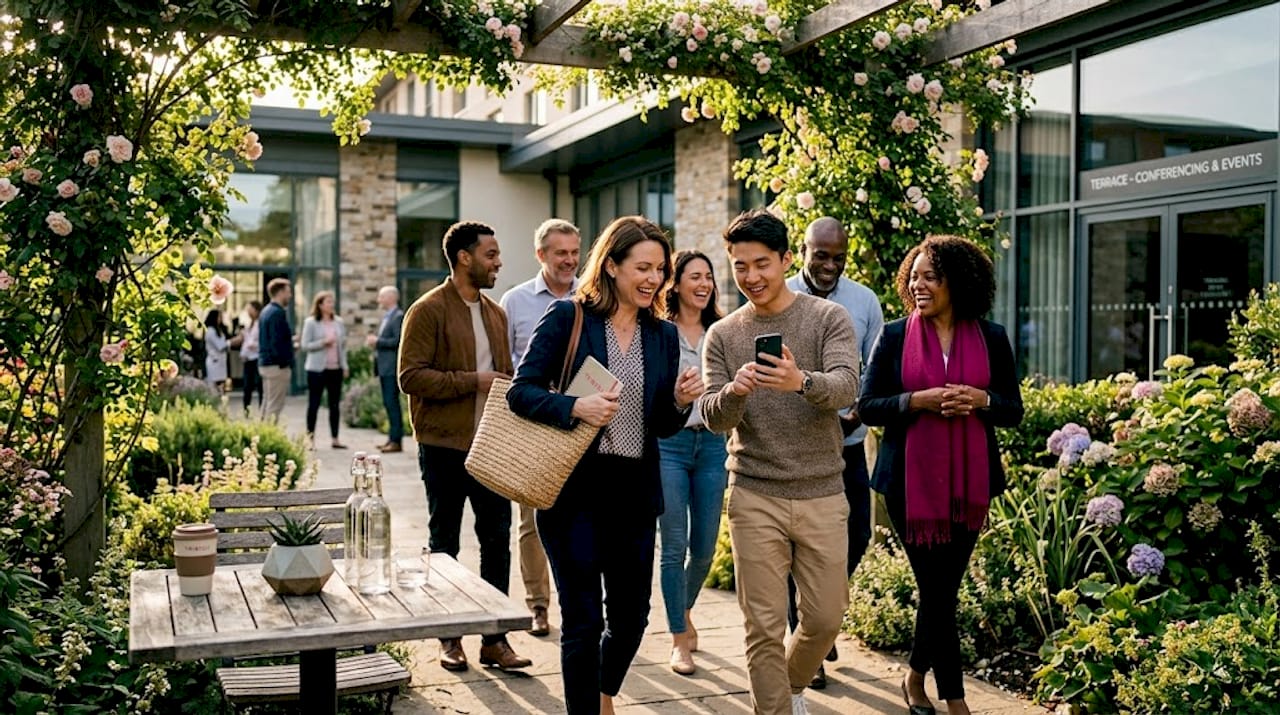
Consider the communication dimension. When two colleagues have navigated a market in Marrakech together, or figured out a missed connection in Naples, they have already practiced real-time, low-stakes problem-solving as a pair. That practice transfers. Back in the office, those same two people communicate with more ease, more shorthand, and more patience.
Here is what the data and real-world patterns confirm about the benefits of group travel for teams:
- Stronger trust networks: Teams report feeling more comfortable raising concerns and disagreements with colleagues they have traveled with.
- Reduced silos: Cross-departmental trips in particular break down the invisible walls between functions that email chains never can.
- Increased creativity: Exposure to new environments, cultures, and ways of doing things stimulates associative thinking. Teams return with new ideas.
- Higher retention: 21% of professionals cite declining morale as a top threat to workforce stability. Travel investment directly addresses that risk.
The retention argument alone should close most conversations about budget. Replacing a single mid-level employee costs between 50% and 200% of their annual salary. A well-designed group trip costs a fraction of that and delivers loyalty, not just satisfaction.
You can explore the full organizational case in this overview of managed corporate travel programs, which covers how structured travel links directly to retention and engagement metrics.
Planning group travel that actually works
Most group trips underdeliver because they are planned as logistics exercises, not as morale-building experiences. Here is how to design one that does the work it is supposed to do.
-
Start with your goal, not your destination. Ask yourself: what specific dynamic do we want to shift? Is it trust between two departments? Motivation after a hard quarter? Recognition for top performers? The answer shapes everything, from the activity type to the group size.
-
Build in facilitated debrief sessions. Facilitated sessions connecting travel to company values transform leisure into strategic growth. A 45-minute evening conversation that links the day's experience to a real organizational challenge is worth more than the activity itself.
-
Set ground rules at the start. Establishing norms around vulnerability and respect before the trip begins is the single most reliable predictor of emotional safety during the experience. Do this in a brief pre-trip call or a short written agreement, not as a lecture on day one.
-
Choose meaningful activities over surface-level entertainment. A cooking class in a local home beats a generic wine tour every time. The former creates interdependence and learning. The latter creates consumption.
-
Keep groups small enough to be personal. For deep morale work, 8 to 16 people is the optimal range. Larger groups can work for recognition and celebration, but intimate groups produce the deeper trust-building that actually changes team dynamics.
-
Plan structured free time. Unscheduled time where people naturally self-organize is where the real bonding often happens. Do not fill every hour.
Pro Tip: After the trip, schedule a 30-minute team reflection within the first week back. Ask each person to share one thing they learned about a colleague and one thing they want to carry into their work. This closes the loop and anchors the experience to behavior change.
For a deeper look at how to select the right type of environment for your team's goals, the guide on how workation destinations are chosen is a practical starting point.
Comparing the four main types of group travel
Not all group travel produces the same results. The right format depends on your team's current state and what you need to shift.
| Travel Type | Primary Goal | Best For | Key Outcome | Morale Mechanism |
|---|---|---|---|---|
| Adventure travel | Challenge and mutual reliance | Teams needing trust and resilience | Stronger interdependence | Shared struggle and emotional exposure |
| Wellness retreats | Stress reduction and recovery | Burned-out or overworked teams | Restored energy and perspective | Psychological safety and relaxation |
| Volunteer and impact travel | Purpose alignment and values | Purpose-driven cultures | Higher job satisfaction and loyalty | Meaning and collective impact |
| Incentive trips | Recognition and celebration | High performers, sales teams | Motivation and retention | Reward, status, and memorable experience |
The volunteer category is often underestimated. Employees in corporate volunteer programs report 79% higher job satisfaction compared to those who do not participate. That number reflects what happens when travel is tied to something larger than the team itself. Purpose-driven trips link values to engagement in a way that standard team-building events rarely achieve.
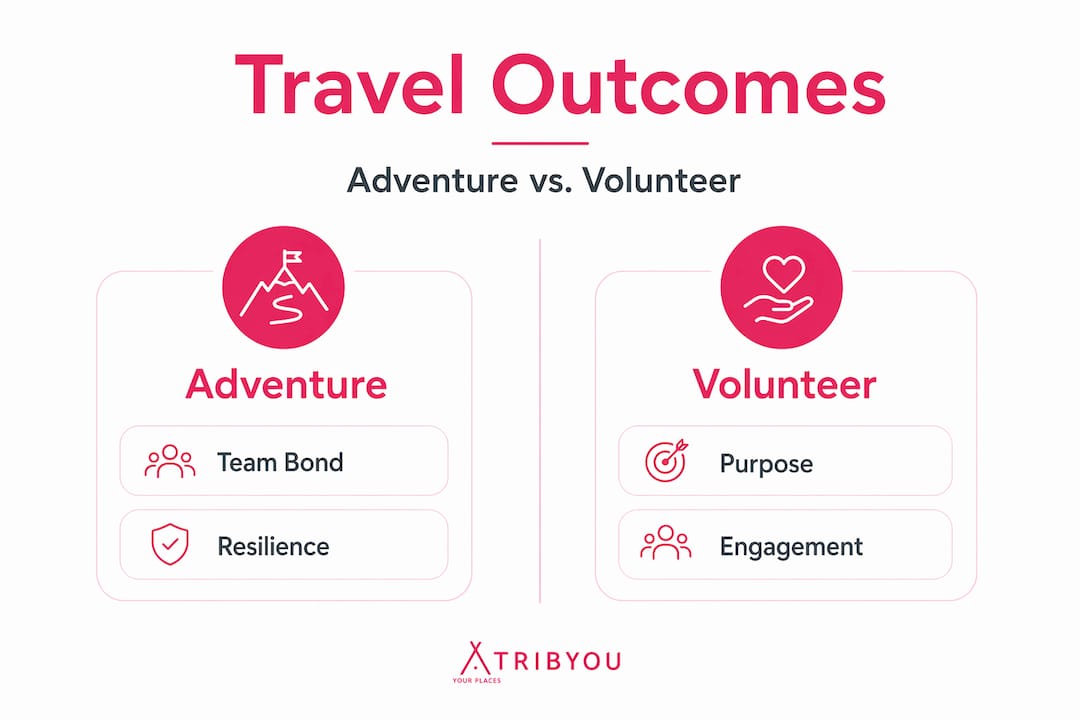
Wellness travel is worth calling out separately. A corporate wellness trip is not a vacation rebranded for HR. It is a structured experience designed to address the specific stressors your team carries, with programming that restores capacity rather than just distracts from the pressure. The distinction matters when you are selecting the right format.
You can also learn more about how wellness retreats enhance travel and what differentiates a well-designed program from a generic spa weekend.
What I have actually learned about making group travel work
In my experience, the trips that fail are not the ones with bad logistics. They are the ones where nobody thought carefully about emotional safety before the first day.
I have seen well-resourced corporate retreats produce almost nothing in terms of real connection because the facilitator skipped the foundational work. No shared intention, no group norms, no space for people to be anything other than their work selves. The team had fun, technically. But three months later, nothing had changed.
What I have found actually works is committing to one uncomfortable moment per trip. Not manufactured discomfort, but a real one. A challenging activity that requires genuine help between colleagues, or a conversation that goes deeper than most office interactions allow. That single moment, handled well, does more for morale than a full day of scheduled programming.
The other thing I believe strongly: managers should not try to facilitate and participate at the same time. If you are leading the team, you are a participant. Hire a skilled external facilitator, or designate someone with no management authority. When the leader steps back, the group opens up in ways that are simply not possible when the boss is running the room.
The importance of team travel also shows up in leadership credibility. Teams notice when a manager invests real time and real money in an experience built for them. Not a perfunctory happy hour. An actual commitment. That signal matters more than most leaders realize.
— Luca
Plan your next team trip with TribYou - Your Places
At TribYou - Your Places, we design group travel experiences that go well beyond logistics. Whether you are planning an adventure retreat, a wellness escape, a volunteer trip, or a recognition journey for top performers, we build itineraries that connect directly to what your team actually needs. Every experience is curated for authenticity, built around the local culture and real community connections that make travel genuinely memorable.
Our team works with managers and facilitators to align the trip design with your organizational goals, from facilitated debrief programming to activity selection and group size recommendations. You bring the team. We handle everything else. Discover what a purposeful group experience looks like at TribYou - Your Places and start building the trip that will still be talked about a year from now.
FAQ
What makes group travel better for morale than office team-building?
Group travel removes people from familiar hierarchies and routines, creating conditions for authentic connection through shared challenge and mutual reliance. Research confirms that interdependence during shared experiences produces stronger, more durable bonds than structured office activities.
How long does a group trip need to be to impact morale?
Even a two-day trip can produce meaningful morale gains when it is intentionally designed with clear goals, facilitated reflection, and activities that require real collaboration. Duration matters less than depth of experience.
What type of group travel is best for a team with low morale?
Wellness retreats work well for burned-out teams because they prioritize recovery and psychological safety before pushing into challenge. For teams that need to rebuild trust, structured adventure travel with a skilled facilitator tends to produce faster results.
How do you measure the morale impact of a group trip?
Use a short pre-trip and post-trip survey measuring trust, communication quality, and sense of belonging. Track retention and engagement metrics over the following two quarters to capture the longer-term effect on workforce stability.
How does volunteer travel affect employee engagement?
Employees who participate in purpose-driven travel report 79% higher job satisfaction compared to colleagues who do not. Connecting travel to a meaningful cause amplifies both the emotional impact of the experience and the employee's sense of alignment with company values.